Control the airflow
Custom sizing helps the hood capture heat and vapour at the source. The canopy, overhang, duct route and fan selection can be considered together so the system is not guessed after the hood is already built.
 Fixakitchen
Commercial kitchen repairs Cape Town
FixakitchenCustom hood extractors Cape Town
Fixakitchen
Commercial kitchen repairs Cape Town
FixakitchenCustom hood extractors Cape Town
Custom extraction, airflow and stainless canopies
A commercial extractor hood should do more than fit over equipment. It needs to capture heat, smoke, steam and grease properly, work with the fan capacity, allow practical grease filtration and fit the actual space available on site.
Why custom matters
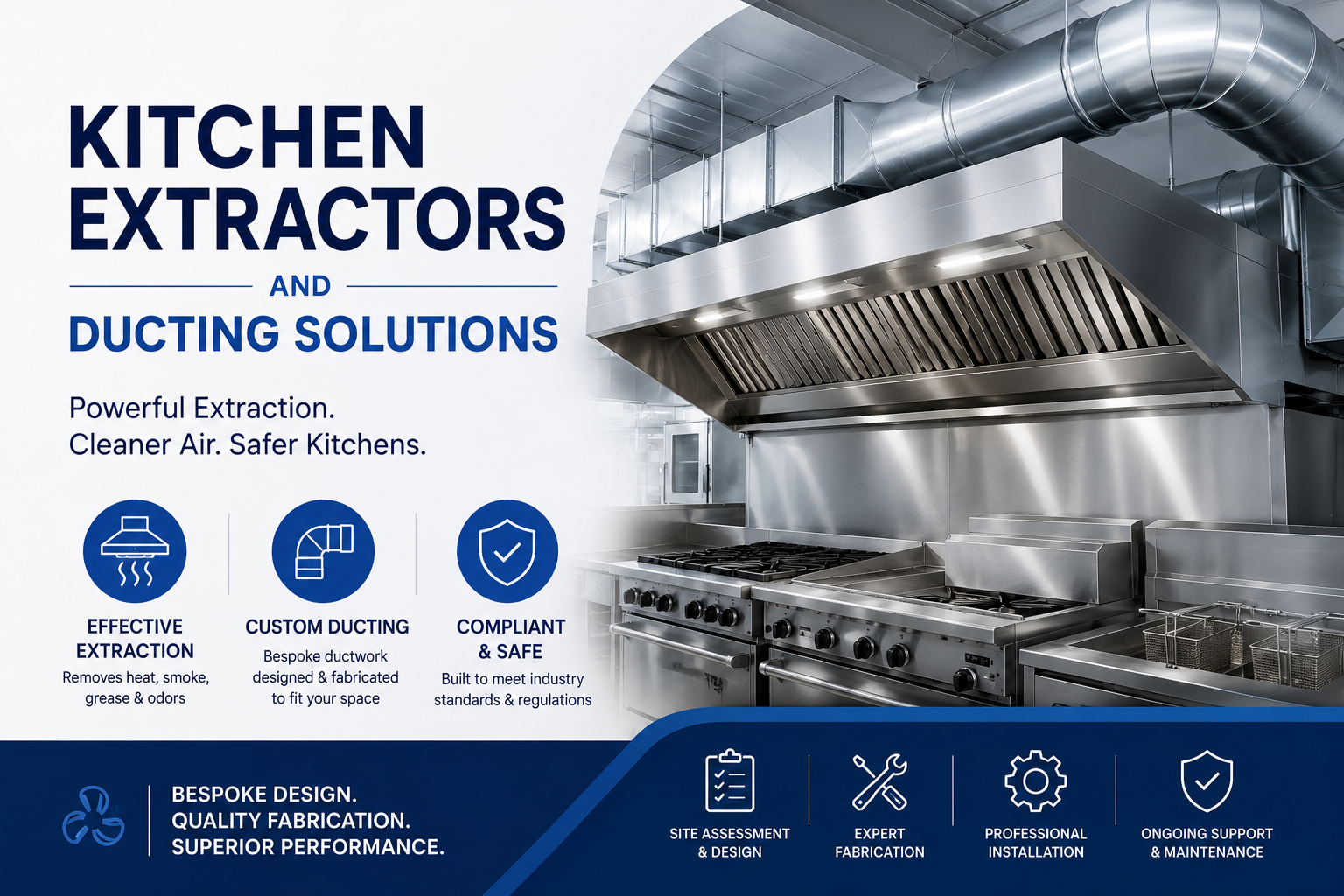
Many kitchens have awkward ceilings, tight walls, unusual equipment positions, mixed cooking loads or service routes that make a standard canopy a poor fit. A custom hood extractor lets the canopy size, capture area, filter position and duct connection be planned around the cooking line instead of forcing the kitchen to work around a generic hood.
Fixakitchen helps with practical hood extractor planning for restaurants, cafes, takeaways, bakeries, food kiosks and production kitchens in Cape Town. We think through airflow, cleaning access, grease management, stainless build quality and how the hood will be maintained after installation.
Planning details
The goal is a hood that is practical to build, practical to clean and matched to the way the kitchen actually cooks.
Custom sizing helps the hood capture heat and vapour at the source. The canopy, overhang, duct route and fan selection can be considered together so the system is not guessed after the hood is already built.
Different cooking equipment creates different heat, smoke and grease loads. We can plan the hood around required extraction volume, fan performance, duct losses and the equipment below the canopy.
Filter access matters. A custom hood can allow affordable baffle-style grease filters, sensible filter angles and easy removal for cleaning, instead of awkward custom consumables that are hard to maintain.
Not every kitchen has a clean wall and perfect ceiling height. Custom stainless canopies can be shaped around columns, low bulkheads, tight corners, kiosks, service counters and existing equipment.
CFM, capture velocity and hood design
A professional kitchen extractor is designed around capture first. The canopy must overhang the cooking equipment, hold the rising heat plume long enough for the filters to work and pull air through the hood face at a useful velocity. CFM is the volume of air moved per minute, but the number only makes sense when it is matched to the hood size, the cooking load and the duct system connected to it.
A fryer line, chargrill, griddle, wok station, combi oven or bakery oven does not produce the same heat, smoke, steam and grease load. We look at the appliance type, hood length, hood depth, mounting height, side draughts, filter area and duct route before deciding how much extraction is needed. The aim is controlled capture, not just a noisy fan pulling blindly through a duct.
Static pressure, fan curve and motor kW
Once the target CFM is known, the next question is whether the fan can still move that air through the real system. Straight duct, bends, reducers, roof cowls, filters, discharge louvres and long horizontal runs all add resistance. This resistance is static pressure, and it is the reason two fans with similar-looking motors can perform completely differently once connected to a kitchen hood.
Motor kW must be chosen with the fan curve and system resistance in mind. Undersized motors lose suction, run hot and struggle as filters load with grease. Oversized, poorly controlled systems waste energy, increase noise and can pull the room into heavy negative pressure. The correct design is a balance between CFM, static pressure, impeller type, motor kW, belt or direct drive arrangement, duct velocity and service access.
Roof fans and discharge planning
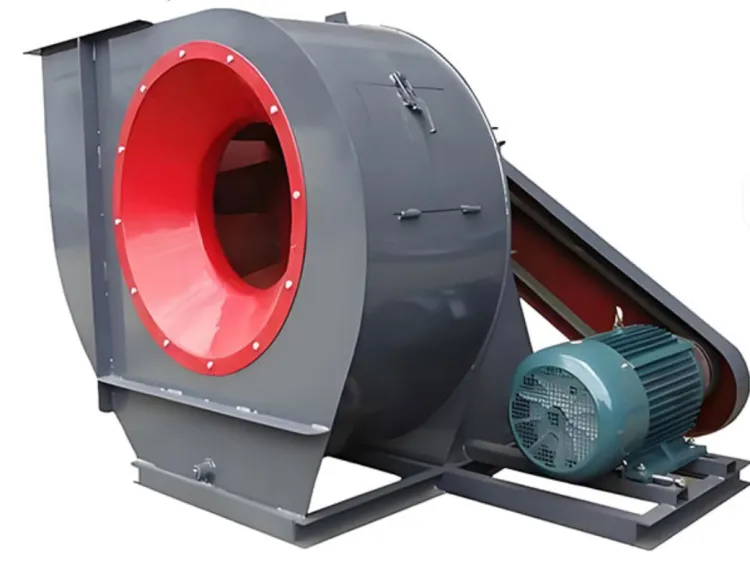
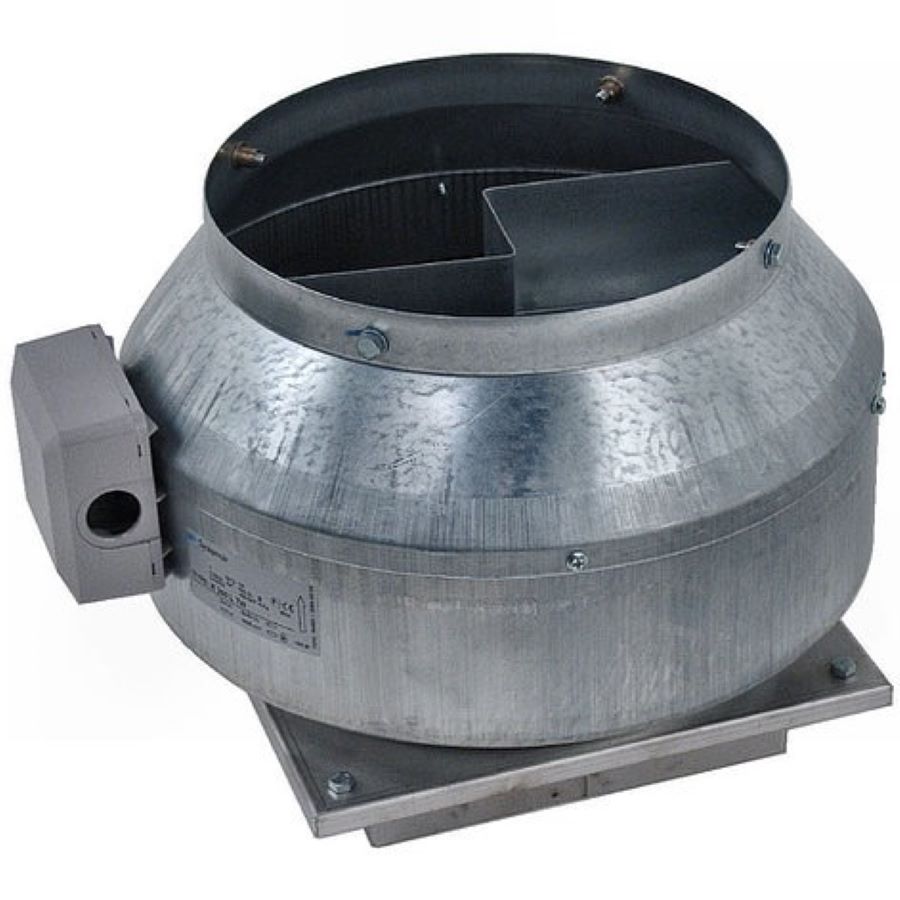
Roof-mounted and inline extractor fans can work well when the discharge route is planned properly. The fan position affects service access, noise, weather protection, grease drainage, duct cleaning and how safely fumes are released away from windows, intakes and neighbouring buildings.
A small roof fan can be suitable for lighter extraction, while a heavier centrifugal fan may be needed for longer duct runs, multiple bends or high-grease cooking. We match the fan type to the hood duty, duct layout and required pressure instead of assuming one fan style solves every kitchen.
Make-up air and room pressure
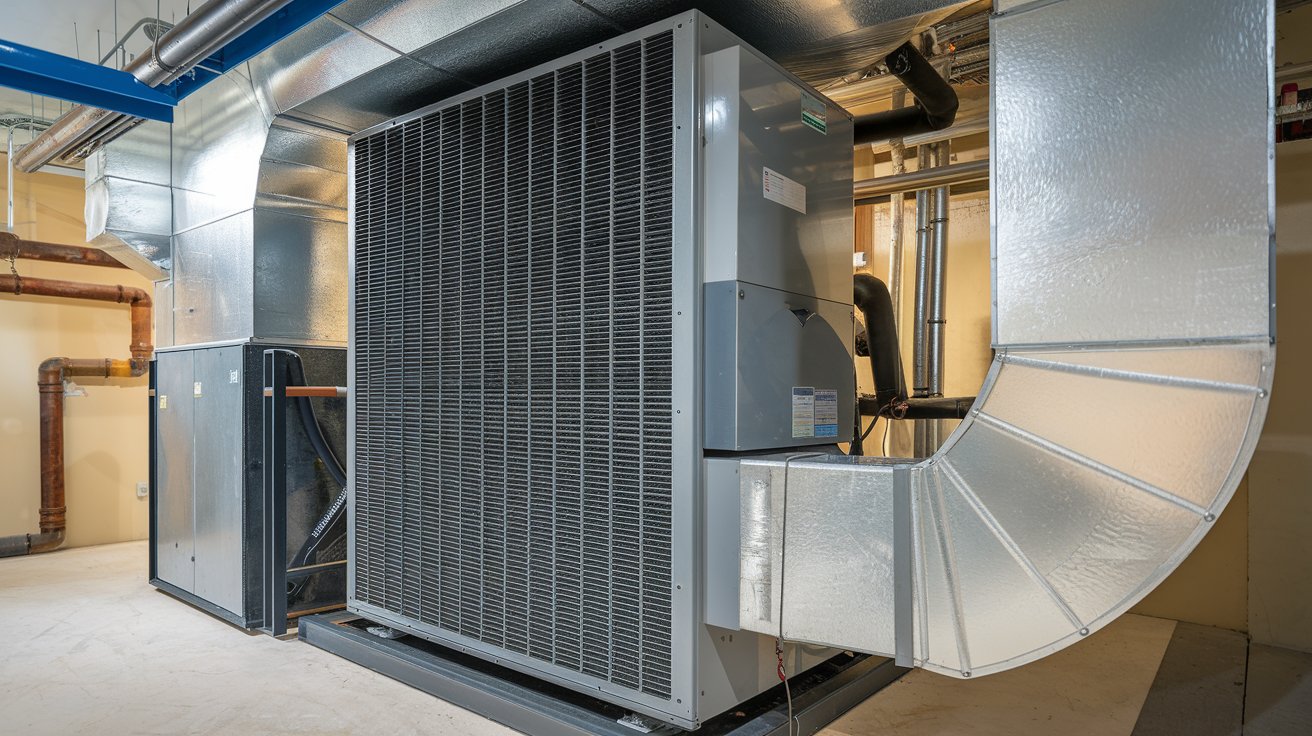
If a hood removes thousands of CFM from a kitchen, that same air must enter the building again. Without planned make-up air, the extractor will pull replacement air through doors, ceiling voids, drains, dining areas or the AC return path. That can cause weak hood capture, hot kitchens, smoky rooms, door pressure problems and poor comfort for chefs.
Make-up air handlers are especially important in large rooms with heavy cooking equipment and a separate air-conditioning duct system. If the hood removes the cooled air faster than the AC can condition and return it, the AC system starts losing the battle. A balanced MAU design supplies fresh air in the right place, at the right volume and velocity, so the hood can capture heat and grease without destroying room comfort.
Fire suppression and grease safety
A commercial hood is part of the kitchen fire safety system. Grease filters, hood plenums, duct runs, fans and cooking appliances all sit in the same risk path: heat, oil vapour, flame and grease build-up. A proper hood layout must allow for suppression nozzles, detection links, manual pull station routing, gas or electrical interlock and access for future inspection and servicing.
Wet chemical kitchen suppression is commonly used above fryers, griddles, chargrills, ranges and other grease-producing equipment because it is designed to knock down flames and help prevent re-ignition on hot cooking surfaces. We do not treat suppression as an afterthought. The canopy, filters, duct access panels, fan position and equipment line must be coordinated so the external approved fire contractor can protect the appliance hazards, hood plenum and duct path correctly.
Fire suppression equipment, installation, commissioning and certification are handled through external approved fire protection services. Our role is to make sure the hood, ducting, access and equipment layout are ready for that specialist scope and do not block the safety system.
Visual direction
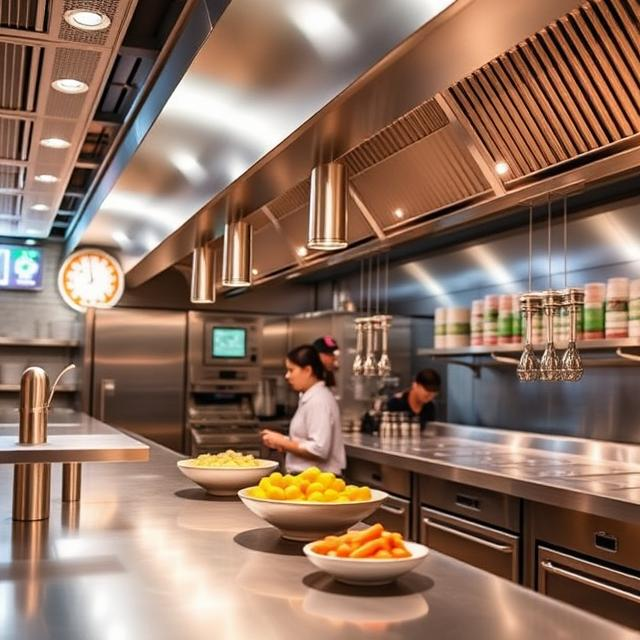
These examples show the kind of commercial kitchen spaces, stainless work and canopy planning details that influence a custom extractor build.
Extraction
Hood depth, overhang and filter access should be planned around the appliances producing heat, smoke and grease.
Stainless
Stainless surfaces, splashbacks and hood details should support cleaning, durability and access after installation.
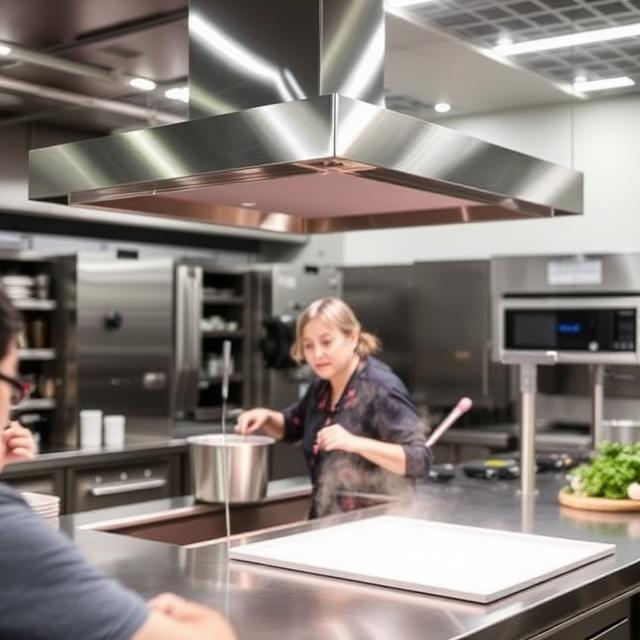
Design
Measurements, equipment positions and duct routes help avoid expensive changes once stainless fabrication starts.
What to send
For a hood extractor request, send photos of the wall or ceiling area, rough measurements, the cooking equipment list and any known duct or fan route. If you already have a drawing, menu or equipment layout, send that too.