If a domestic fridge is no longer pulling down in temperature and the compressor continues running hot, isolate the appliance from power, protect the food load and book a service assessment. Continued operation under poor cooling conditions can raise discharge temperature, damage compressor oil, reduce motor cooling and convert a recoverable fault into a sealed-system failure.
 FixakitchenR600a fridge field note
Side-by-side fridge compressor work
R600a Side-by-Side Fridge Compressor Change Out
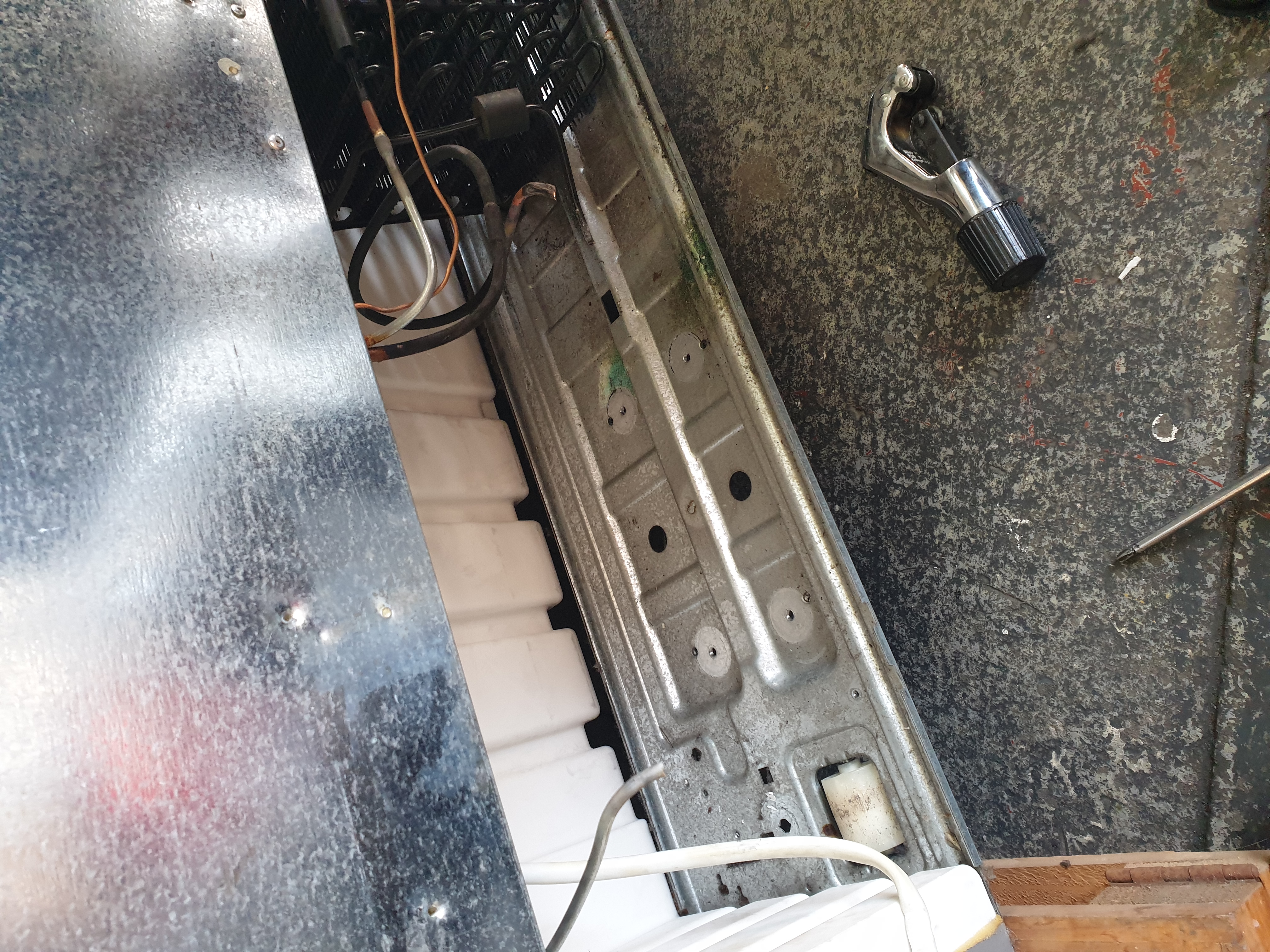
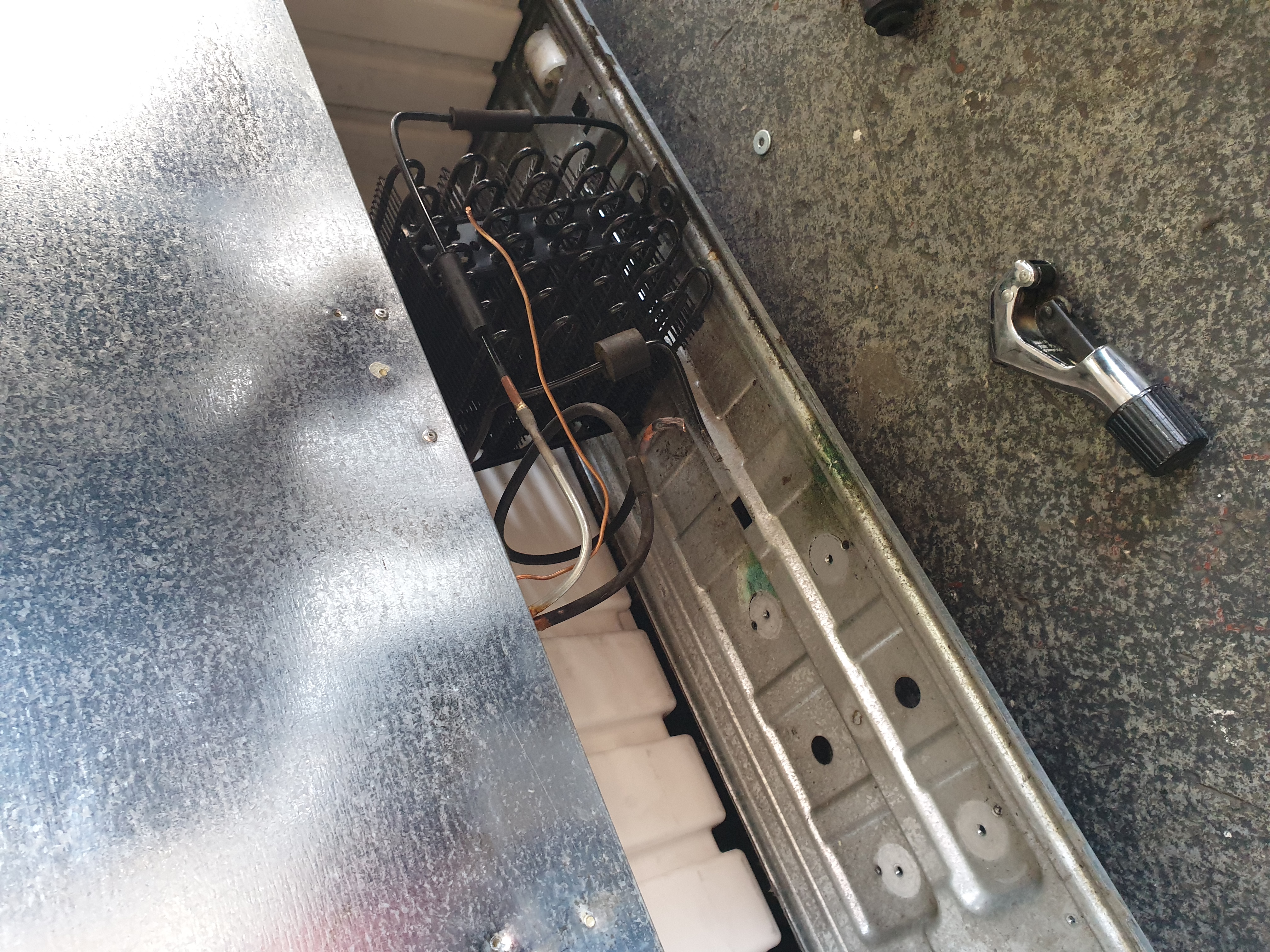
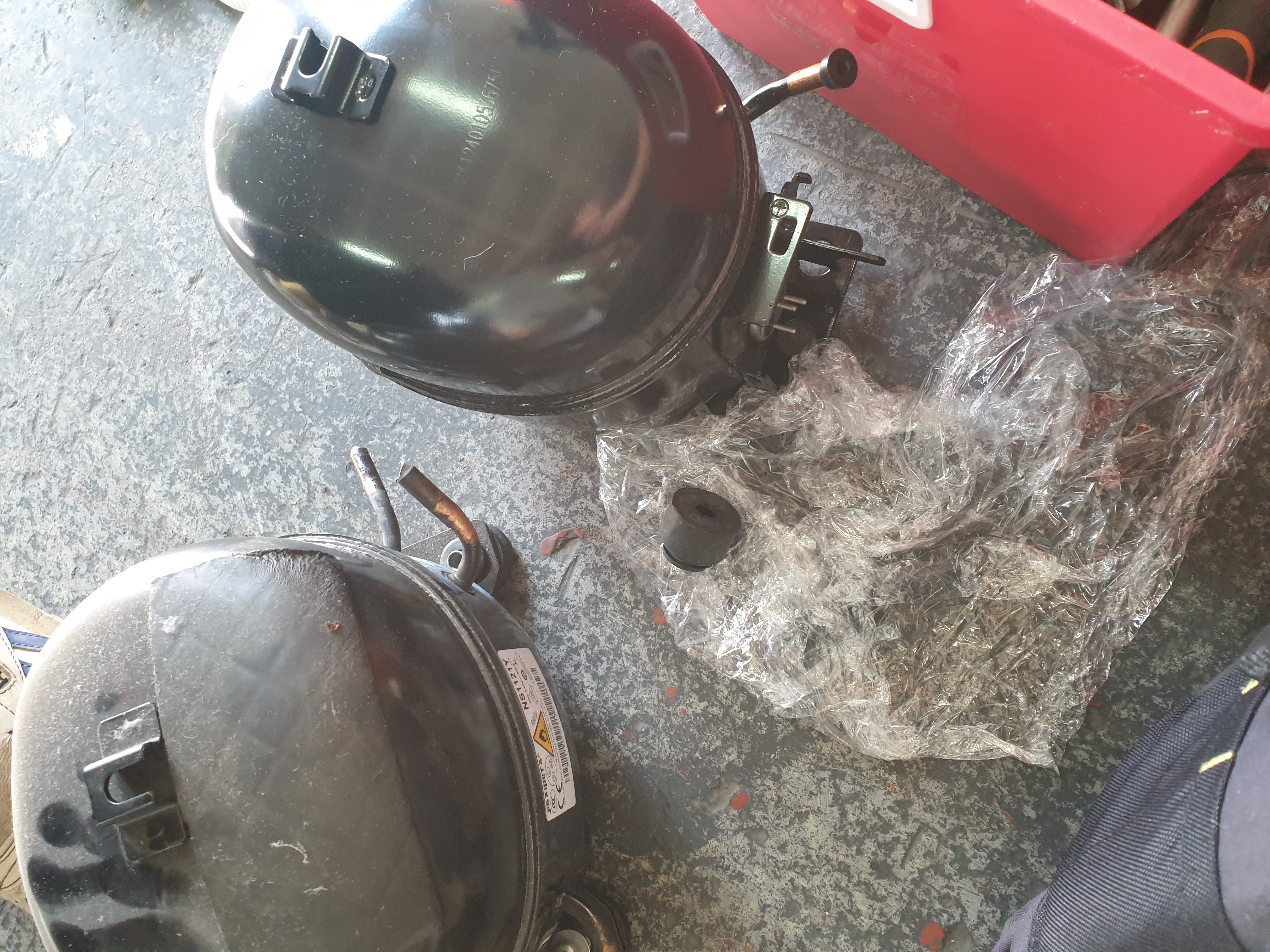
Before and after photos from a domestic side-by-side fridge compressor replacement. R600a is an efficient hydrocarbon refrigerant with good thermodynamic performance, but it is also highly flammable. Sealed-system work therefore requires controlled recovery, ventilation, nitrogen purging, leak testing, safe brazing practice, deep evacuation and an accurate charge by weight.
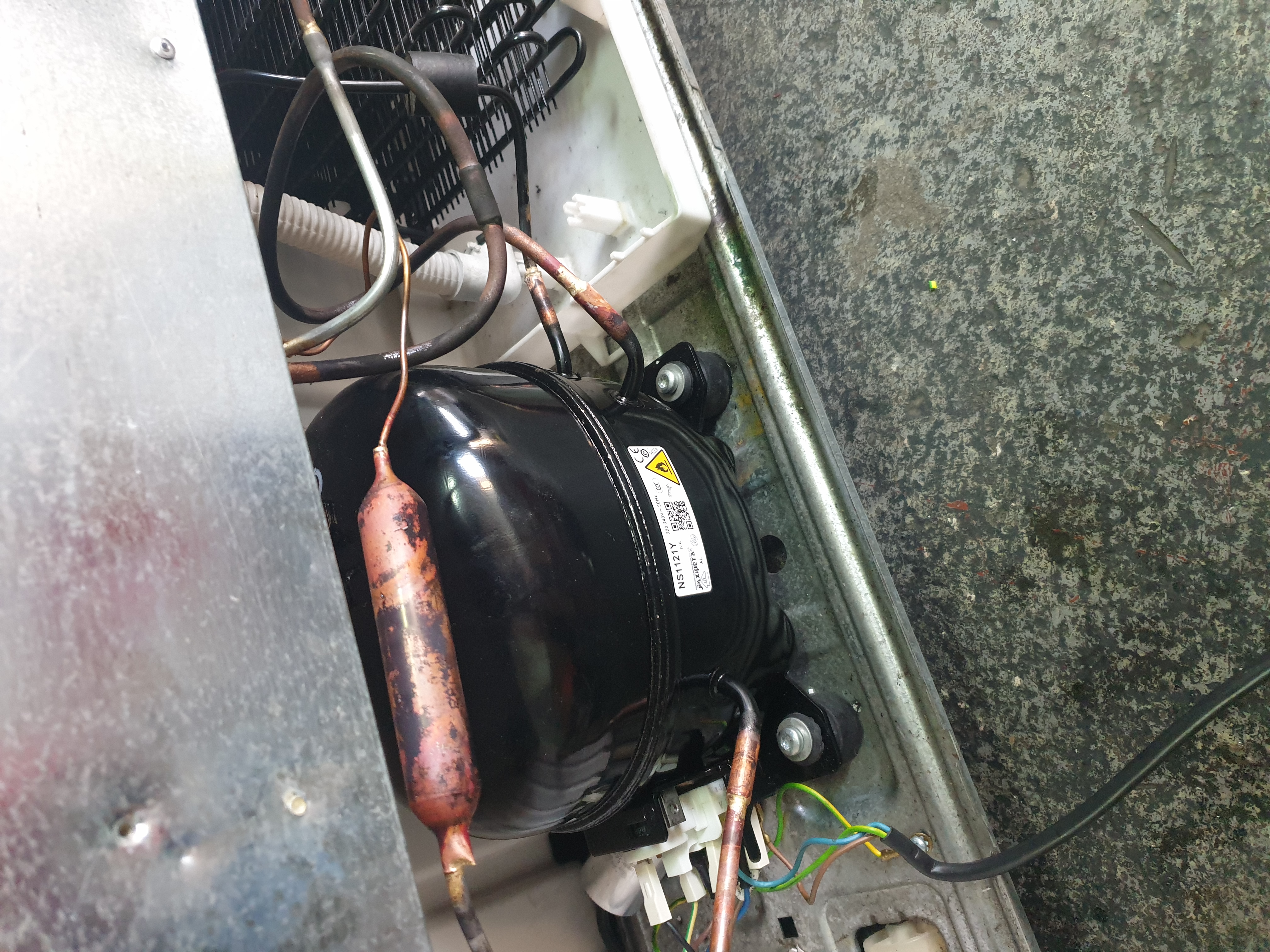
R600a is isobutane, a hydrocarbon refrigerant. Its small molecular charge works well in domestic refrigeration, but the flammability risk changes the work method. Ignition sources must be controlled, the work area must be ventilated, and the final charge must match the data plate because even a small error affects pressure, mass flow and evaporator performance.
Many domestic fridges use capillary-tube metering, where the refrigerant charge, condenser airflow, filter drier condition and compressor capacity all have to match closely. There is very little system volume to absorb mistakes, so a restriction, weak compressor, poor condenser cooling or incorrect charge can quickly move the evaporator away from its designed operating temperature.
Cold room applications are not immune to faults, but many are more forgiving because the refrigeration circuit is larger and the metering device is often a TXV or EEV. Those valves can respond to changing load, superheat and evaporator demand in a way that a fixed domestic capillary tube cannot. The diagnosis still matters, but the system behavior is different.
The compressor bay is opened, the system is made safe, the failed compressor is removed, the filter drier is replaced where required, and the pipework is prepared for clean joints. After installation the system is pressure tested, evacuated to remove air and moisture, charged by weight, then checked against current draw, line temperature, cabinet temperature and heat rejection at the condenser.
A warming fridge is a technical symptom, not only an inconvenience. The root cause may be a refrigerant leak, partial restriction, failed fan, blocked condenser, sensor error, control fault or compressor wear. Early service gives the technician a better chance of identifying the primary fault before overheating, oil breakdown or repeated start attempts create secondary damage.
Warm fridge service advice
Fridge temperature rising?
Isolate the appliance if the compressor is excessively hot, the cabinet temperature is rising or there is any abnormal smell. Move food where possible, then send photos of the fridge, model plate, compressor area and current symptoms when booking the service call.