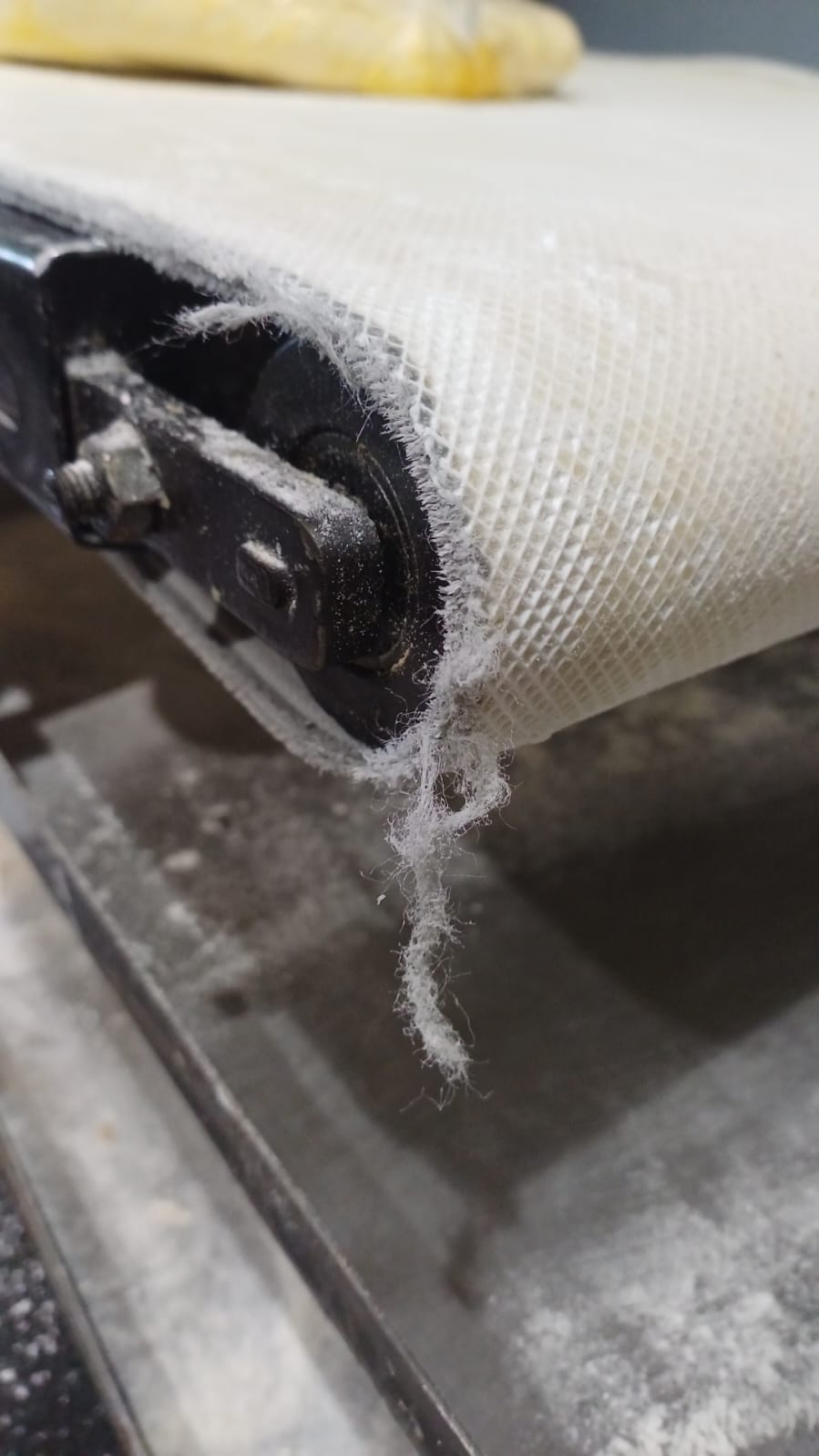
A dough sheeter belt is not just a moving table. It controls friction, feed angle and dough support as the sheet enters the rollers. When the belt is frayed, glazed, stretched or contaminated with old flour paste, the dough can skid, bunch, tear or feed into the rollers unevenly. That changes thickness and puts extra load on the motor and gearbox.
 FixakitchenDough sheeter field note
Bakery roller and belt service
Dough sheeter roller belt replacement, oil service and scraper cleaning.
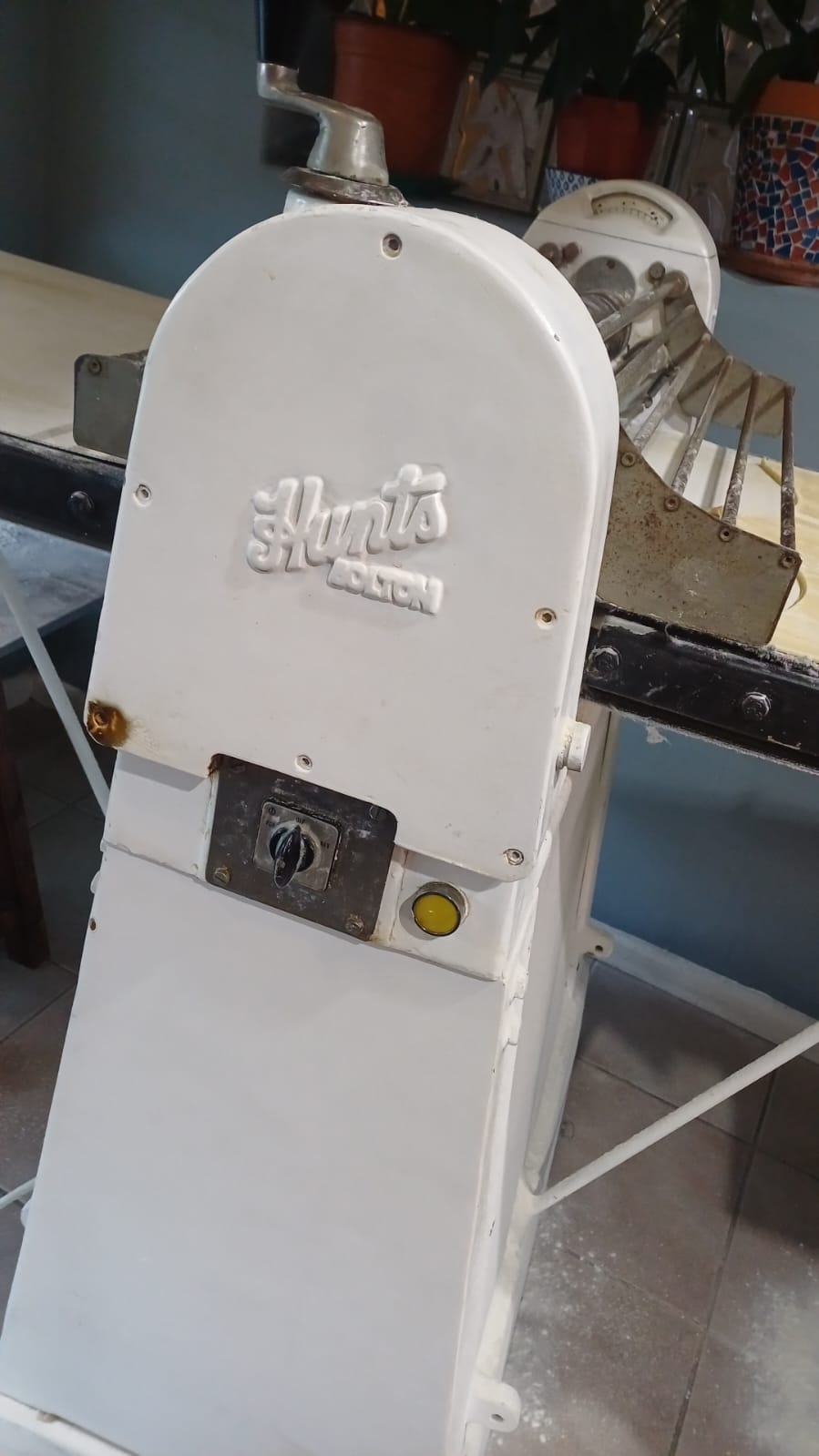
This field note covers a commercial dough sheeter service where the belt, scraper area, roller alignment and drive condition all mattered. A sheeter only works well when the dough is carried squarely, the rollers stay parallel and the belt tracks without dragging against the frame.
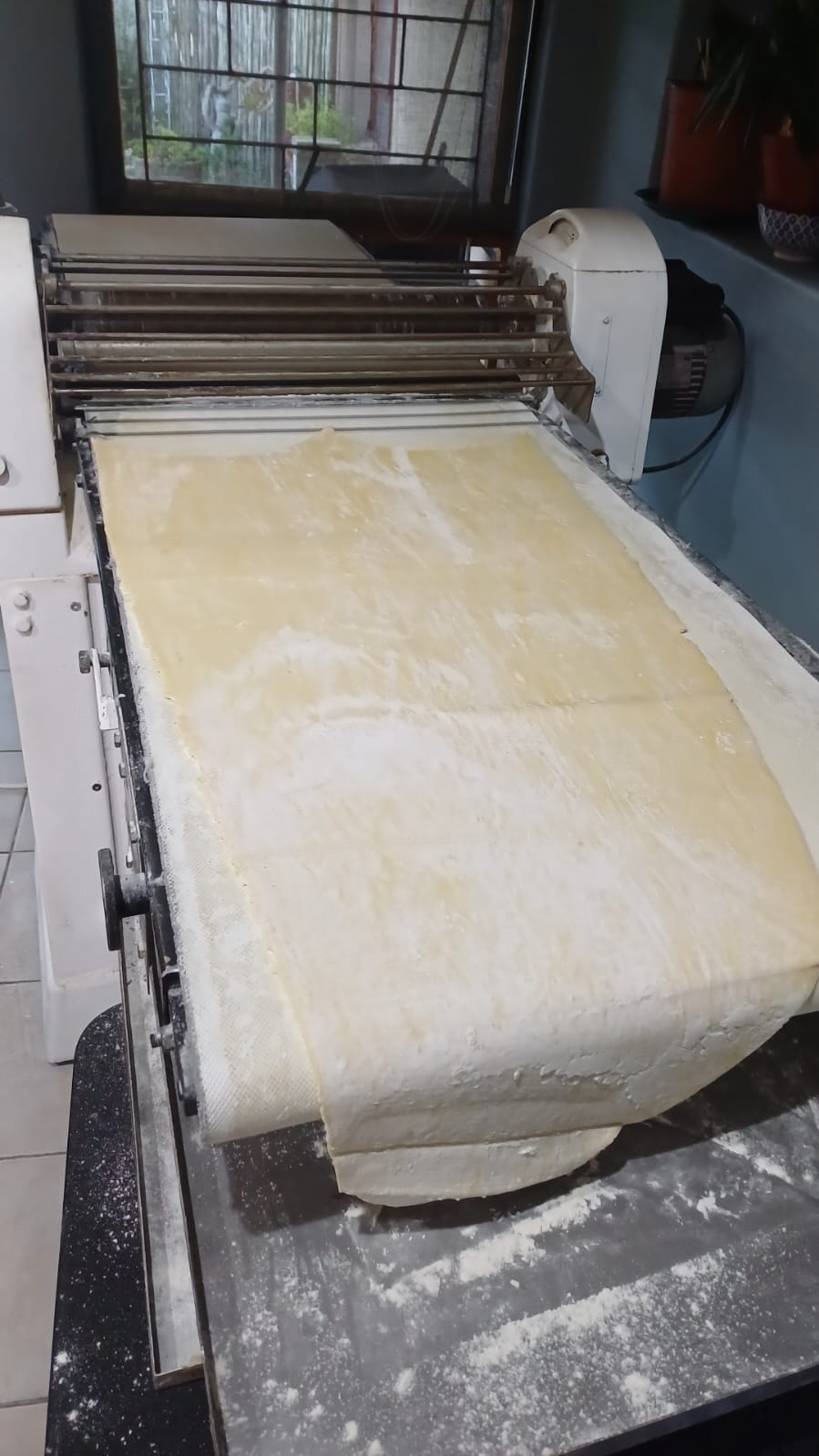
Changing a belt without tracking it properly can damage the new belt quickly. The belt has to run central over the end rollers, with even tension across both sides. Too little tension causes slipping; too much tension overloads bearings and shafts. A small tracking error becomes a large edge-wear problem once the machine runs through a full production shift.
Scraper blades remove dough film from roller surfaces so the next pass stays clean and even. If scrapers are dirty, blunt, bent or set with the wrong contact pressure, dough residue builds up on the rollers. That creates drag, hygiene risk and inconsistent sheet thickness. Cleaning and adjusting the scraper area is as important as replacing worn belts.
The roller gap must remain parallel from left to right. If one side is tighter, the dough sheet exits thicker on one edge and thinner on the other. We check adjuster movement, bearing play, roller condition and side-frame fasteners because mechanical looseness can look like a simple operator setting problem when the real fault is in the support geometry.
Where the sheeter uses an oil-filled gearbox, old oil should be changed before it loses viscosity or carries too much wear debris through the gears. On chain, pulley or gear-driven sections, the service focus is lubrication condition, backlash, belt or chain tension, keyway security and motor load. Clean drive service reduces heat, noise and sudden production stoppages.
Dough sheeters fail gradually before they fail suddenly. Frayed belts, dirty scrapers, dry bearings, loose drive parts and poor tracking all create more resistance. Servicing those areas early keeps the machine feeding straight, protects the rollers and helps bakeries avoid downtime during pastry, croissant, pizza or pie production.
Sheeter repair notes
Need a dough sheeter or pastry roller checked?
Send a photo of the data plate, the belt edge, the roller area and a short video of the machine running. Useful symptoms include belt drift, dough tearing, scraping noise, uneven sheet thickness, slipping, jamming or oil leaking from the drive side.