 FixakitchenBakery oven repairs
Bakery equipment repairs Cape Town
Bakery oven, mixer and production machine repairs.
Fixakitchen helps Cape Town bakeries, restaurants, cafes and food production kitchens with bakery equipment repairs for rotary rack ovens, deck ovens, convection ovens, proofers, dough mixers, sheeters, slicers and production machines.
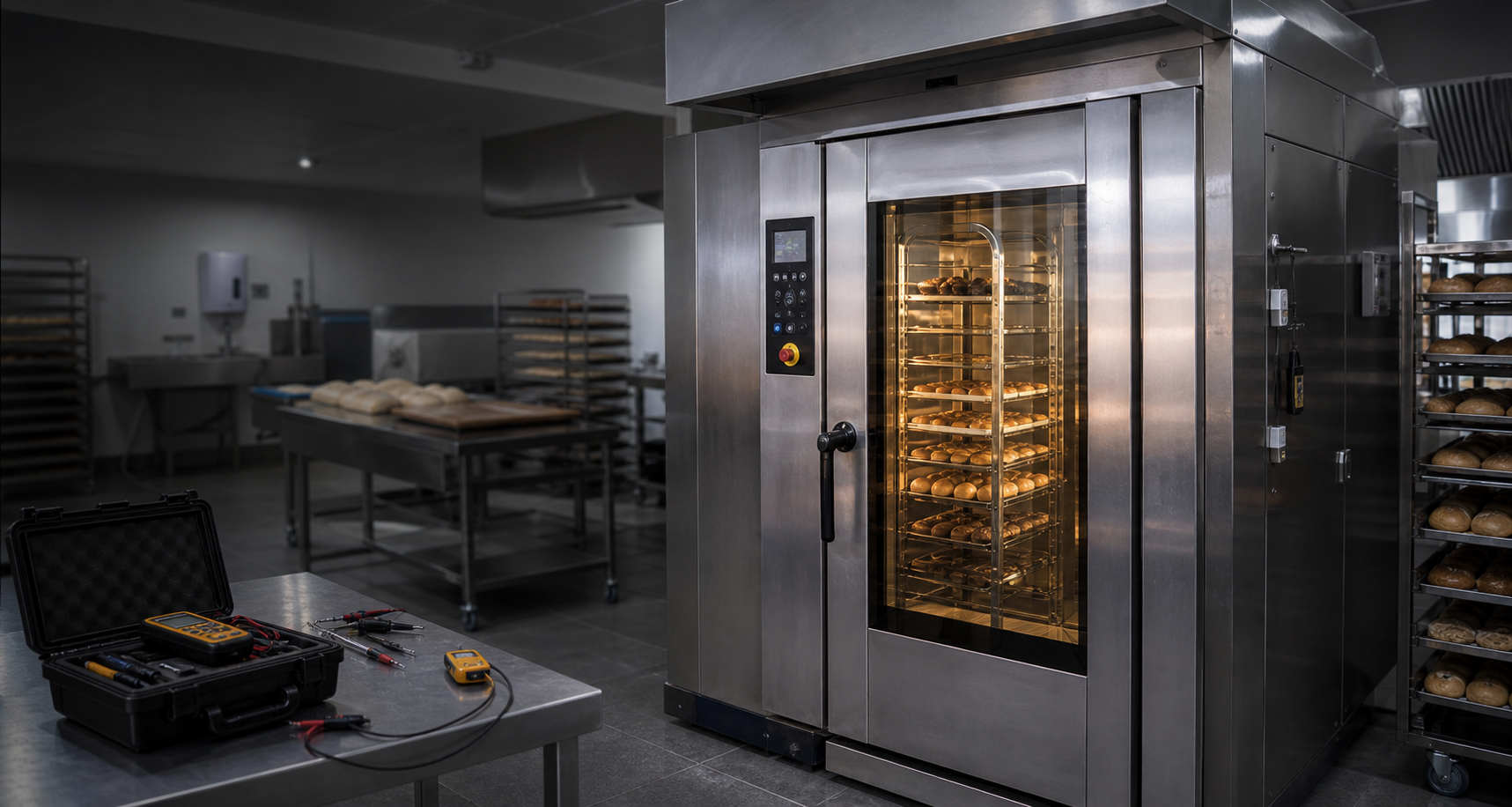
A rotary rack oven is a forced-convection baking chamber. The rack turns so every tray repeatedly passes through the high-velocity air stream, while the fan impeller, heat exchanger or elements, steam system, damper and controller try to hold an even thermal profile. When one subsystem drifts, the symptoms look simple: pale product, burnt corners, dry crust, poor oven spring, slow recovery or random trips.
We check the machine as an electromechanical heat system: airflow volume, fan direction, rack drive, motor current, temperature probe response, door sealing, steam delivery, extraction, contactors, relays, overloads, burner safeties where fitted and the actual temperature behaviour inside the bake cycle.
01 Rack rotation and drive sensing
Rotary ovens may use a geared motor, chain drive, hook lift, platform drive or turntable assembly. Where a small magnet, reed switch, Hall-effect sensor or proximity sensor is fitted, that feedback tells the controller whether the rack is indexing or rotating correctly. A weak magnet, contaminated sensor face, loose bracket or tired gearbox can create uneven baking long before the oven fully stops.
02 Circulation fan and blade service
The circulation fan blade or impeller must stay balanced, clean and removable. Food vapour, flour dust and baked-on grease can lock the hub onto the motor shaft or taper bush. A planned six-month service with cleaning, set-screw inspection and a suitable food-area anti-seize or food-grade lubricant on the service surfaces helps prevent the blade from becoming a destructive removal job when the motor fails.
03 Temperature control and safeties
We inspect temperature probes such as thermocouples, NTC/PTC sensors or RTD-style sensors where used, then compare controller demand against contactor, SSR, element or burner response. High-limit thermostats, door switches, fan proving, flame supervision, gas valves and air pressure switches must be treated as safety devices, not bypass points.
What we check on a rotary rack oven call-out
- Rack lift, hook, trolley alignment, platform movement and door gasket compression.
- Fan motor bearings, impeller clearance, blade hub condition, airflow path and rotation direction.
- Controller outputs, probes, limit thermostats, contactors, overloads, timers and wiring heat damage.
- Steam solenoid, spray tube, water pressure, scale build-up, drain path, damper and extractor operation.
- Gas burner sequence, flame rod, ignition, pressure switches and combustion-related safeties where fitted.
Other bakery repair routes
Deck, convection and production bakery machine faults
Bakery faults can involve elements, thermostats, contactors, timers, steam, fans, belts, bearings, motors, overloads, switches, interlocks and worn mechanical parts. We check the cause before recommending repair.