Cooling capacity
60,000 BTU per hour is approximately 17.6 kW of heat-removal capacity and five refrigeration tons. It is a nominal cooling rating—not the electrical input and not a guarantee of delivered room cooling.
60,000 × 0.000293071 ≈ 17.6 kW FixakitchenCommercial cooling repairs Cape Town
Cape Town HVAC field note
A large ducted air-conditioning system needs more than a like-for-like parts swap. Compressor matching, electrical condition, airflow, refrigerant-circuit cleanliness and the future of the older R22 system must be considered together.
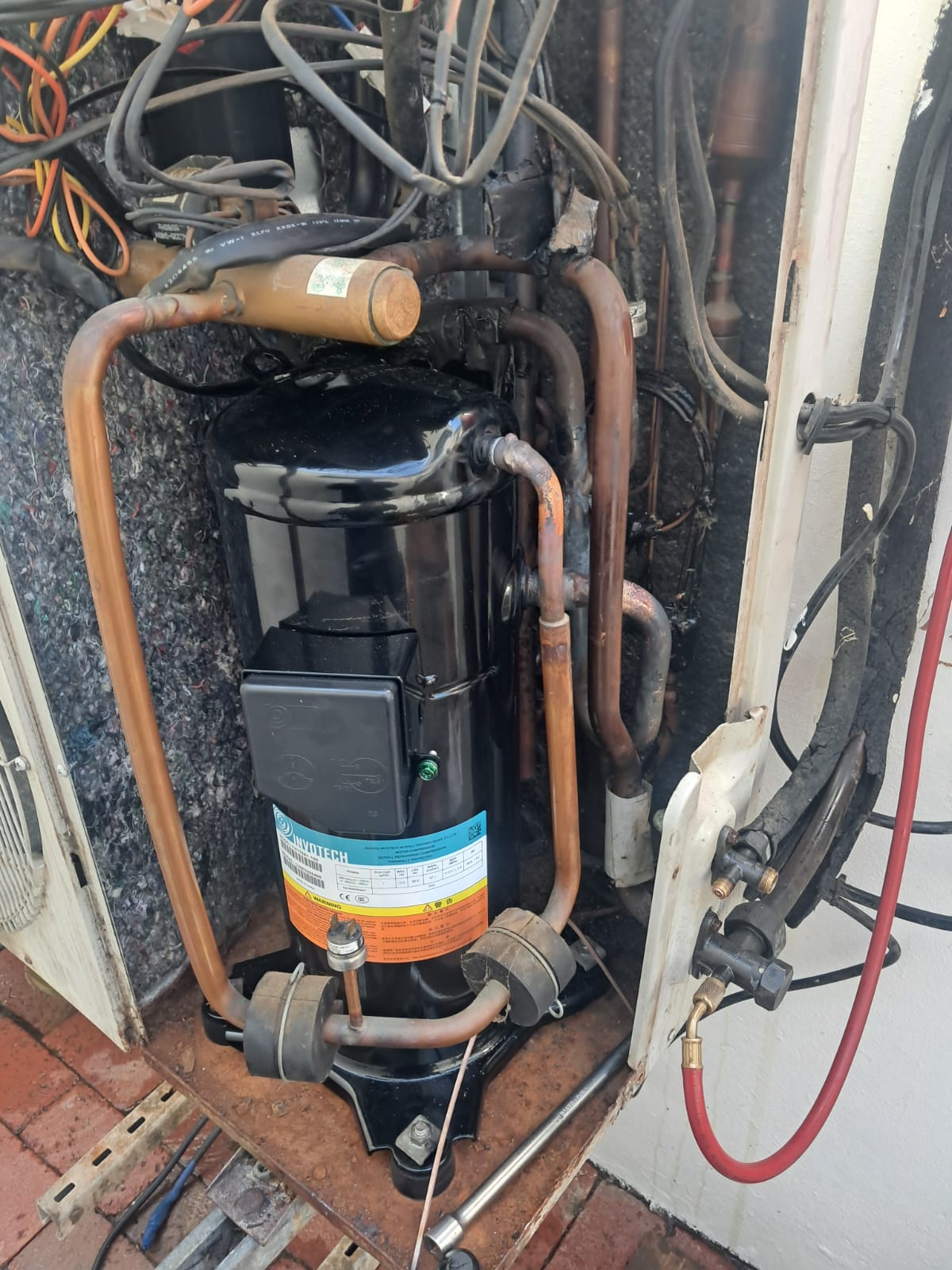
The customer question
A compressor change can restore a sound large-capacity system, but the compressor is one part of a complete cooling circuit. The decision should account for the cause of failure, coil and fan condition, controls, duct airflow, refrigerant containment, compatible parts and expected remaining life.
Because R22 is an ozone-depleting HCFC under South Africa's HCFC phase-down schedule, continued ownership also needs a practical refrigerant and lifecycle plan. That does not automatically make every R22 system unrepairable; it makes evidence-based assessment more important.
What the project shows
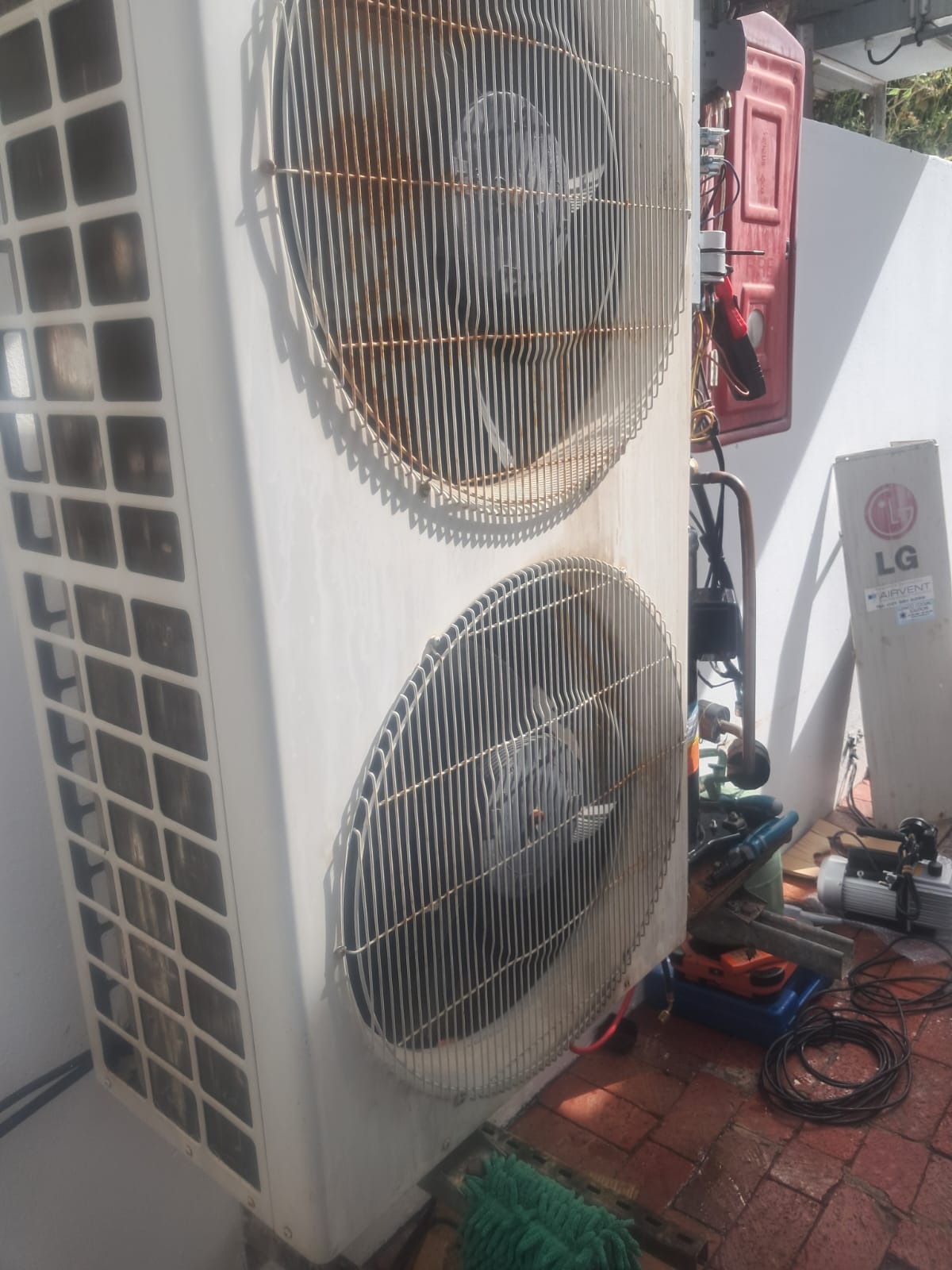
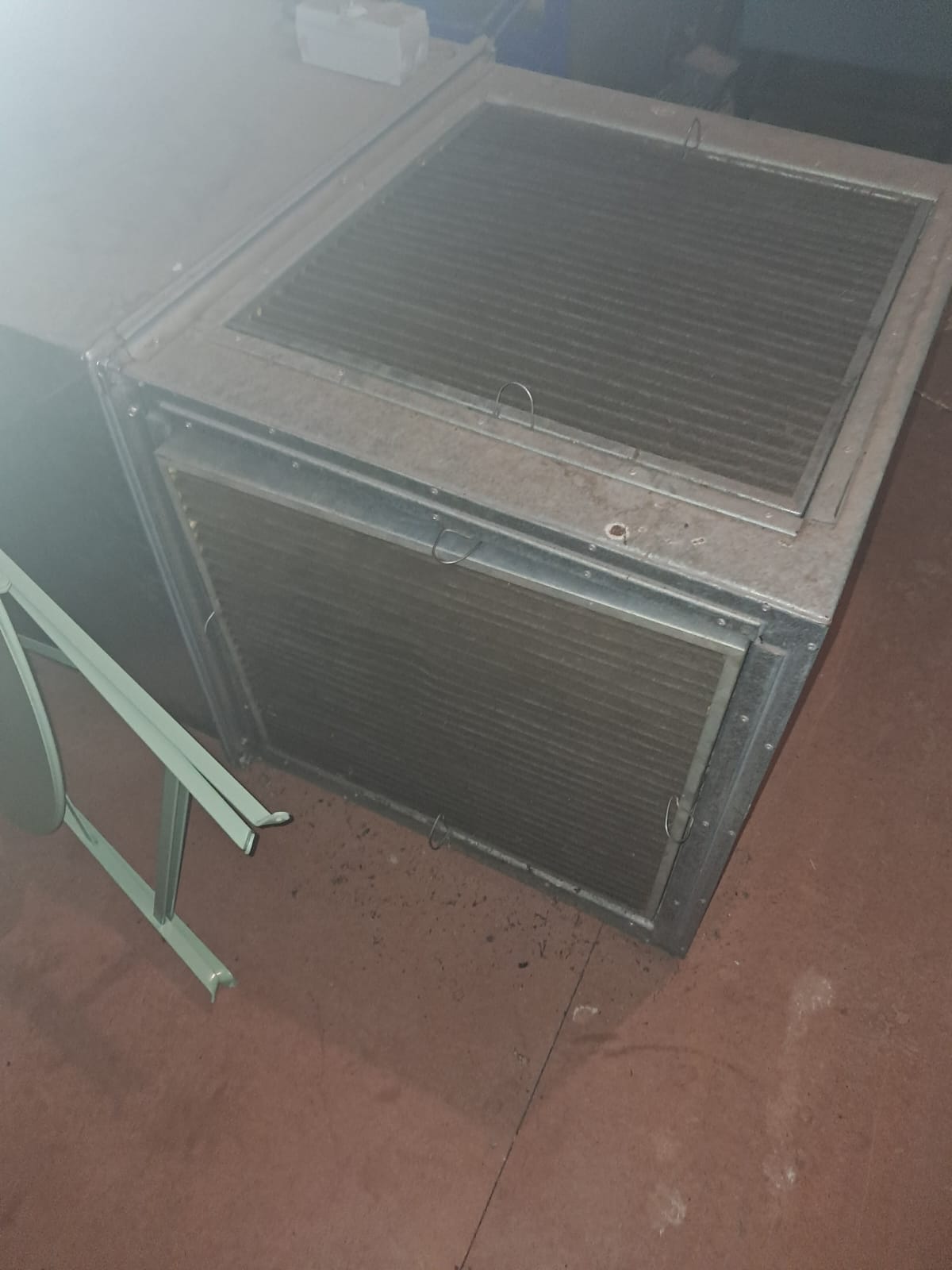
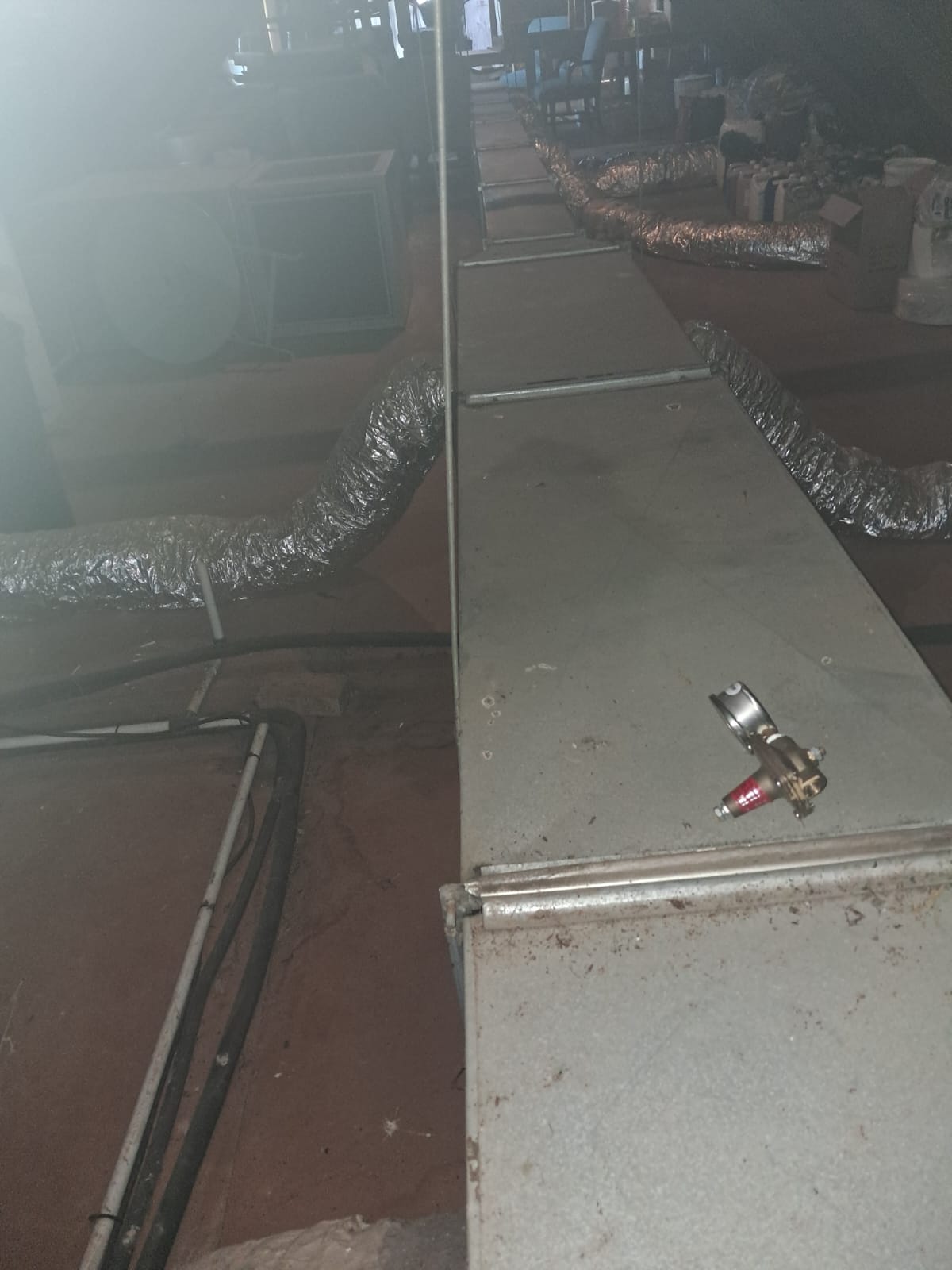
The field photographs document the main areas involved. They also show why diagnosis cannot stop at the outdoor compressor.
Useful system science
Capacity is useful, but it is not enough to select a compressor or diagnose the system.
60,000 BTU per hour is approximately 17.6 kW of heat-removal capacity and five refrigeration tons. It is a nominal cooling rating—not the electrical input and not a guarantee of delivered room cooling.
60,000 × 0.000293071 ≈ 17.6 kWThe evaporator absorbs heat indoors. Refrigerant carries it to the compressor, which raises vapour pressure and temperature. The condenser rejects that heat outdoors before the refrigerant expands and repeats the cycle.
Restricted return air, dirty coils, weak blowers or closed dampers change evaporating conditions. Pressure readings without air temperature, pipe temperature and airflow context can be misleading.
A replacement must suit the refrigerant, required capacity, voltage, phase, frequency, application envelope, oil, connections and expected evaporating and condensing conditions. Physical fit alone is not enough.
Cause-first assessment
A failed compressor may be the damaged component without being the original cause.
Electrical winding condition, insulation resistance where appropriate, starting behaviour, mechanical pumping condition, operating current and protective-device history help separate compressor failure from a supply or control fault.
Filters, indoor coil, blower, duct restrictions, condenser coil, fan direction and fan performance affect refrigerant temperatures and compressor load.
Leak history, oil condition, contamination indicators, restrictions and the circumstances of the failure influence the required clean-up, filter-drier and evacuation plan.
Supply voltage, phase balance where applicable, current, pressures, pipe temperatures, superheat or subcooling as appropriate, air temperatures and stable control cycling provide a more useful result than pressure alone.
A practical ownership decision
Important: A refrigerant change is not a “gas swap.” Compressor suitability, lubricant, seals, expansion components, pressure-temperature behaviour, controls and manufacturer guidance must all be considered. Some systems are unsuitable or uneconomical to convert.
Faster first assessment
Good identification helps us check the likely service route before travel or parts planning.
Customer questions
It may be possible, subject to technical condition, compatible parts, refrigerant availability, leak integrity, cost and expected remaining life. Assessment should compare a defensible repair with replacement rather than deciding from equipment age alone.
No. Tripping can involve supply problems, phase imbalance, contactors, capacitors where fitted, wiring, fan faults, protection devices, high pressure, low pressure or a compressor fault. The electrical and refrigeration fault path should be tested.
The compressor operates inside a heat-transfer system. Poor evaporator airflow can change refrigerant return conditions, while poor condenser airflow raises heat-rejection pressure and compressor load. Both can shorten compressor life.
Not responsibly. The unit and compressor model, electrical supply, application, access, pipework, failure mode and system condition affect scope. Data-plate photographs and an onsite assessment are normally required.
Commercial cooling support
Send the data plates, fault description, equipment photos and Cape Town suburb. Fixakitchen can confirm whether the next step is an HVAC assessment, a specific repair route or a replacement comparison.