R410A is a high-pressure HFC refrigerant blend made from R32 and R125. It behaves almost like a single refrigerant in normal use, but it is still a blend, so it must be handled correctly. When charging, technicians normally charge it as liquid from the cylinder so the refrigerant mixture stays correct. It also runs at much higher pressures than older R22 systems, so gauges, hoses, recovery equipment and service habits must be suitable for R410A.
 FixakitchenTransport refrigeration field notes
Transport refrigeration
R410A transport refrigeration, pressure and compressor design
A transport refrigeration unit is not the same as a small room air conditioner. It has to cool a moving or mobile space, sit in direct sun, handle vibration and still keep the refrigeration cycle stable. When that system uses R410A, pressure readings, airflow, refrigerant charge and compressor design all need to be understood together.
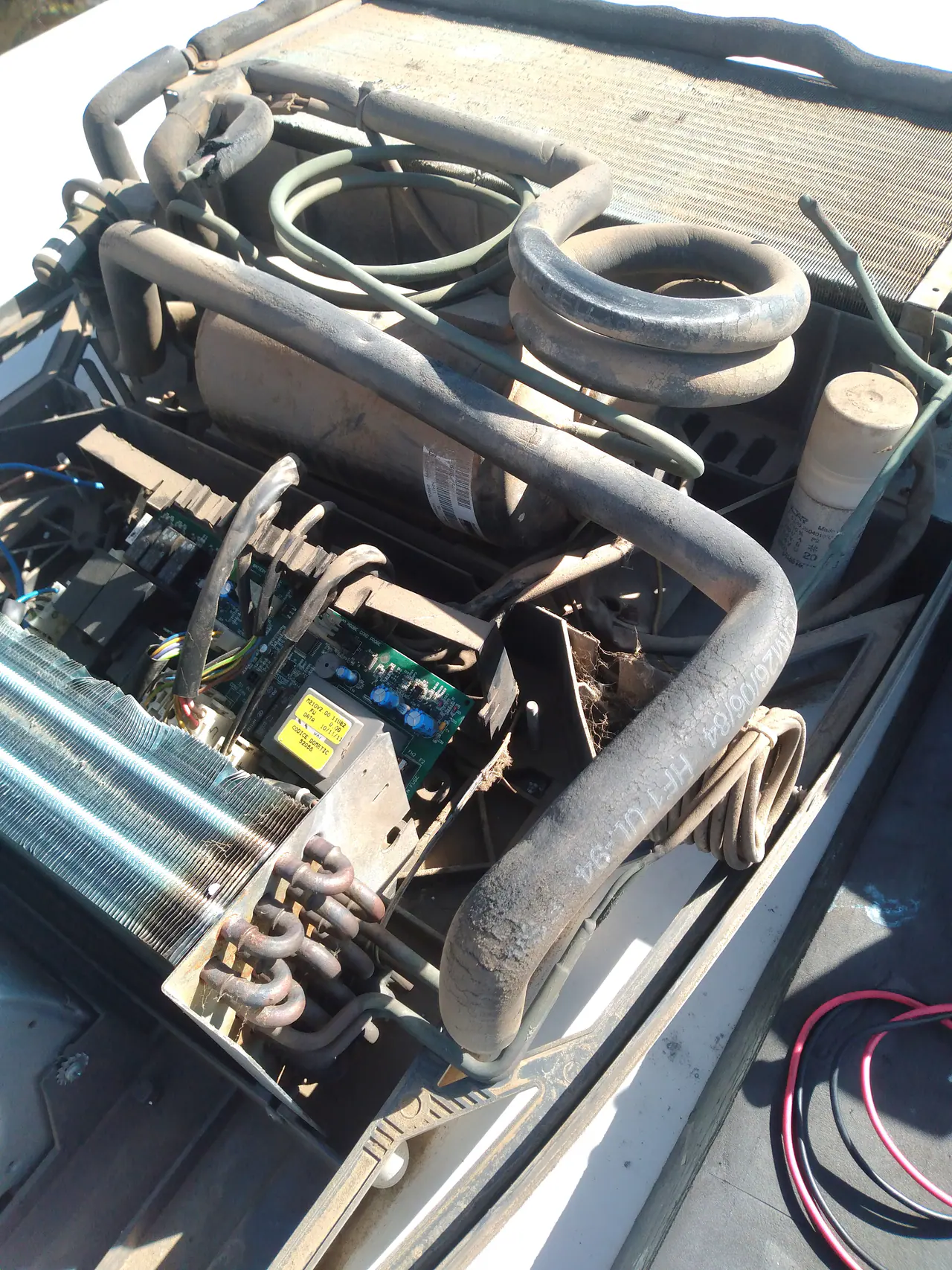
Cape Town is close to sea level, where atmospheric pressure is roughly 101 kPa under standard conditions. That matters because service gauges show pressure relative to the atmosphere around us, while refrigerant pressure-temperature charts are based on the refrigerant's actual saturation pressure. A correct diagnosis is not only "high side" and "low side" numbers. The technician must compare pressure with pipe temperature, ambient temperature, coil condition, airflow and system load.
A transport refrigeration unit has limited space, so the compressor, coils, fans and controls are packaged tightly. Many mobile refrigeration systems use compact scroll or rotary compressor designs because they can suit vibration, capacity and packaging requirements. Some compressors are designed for specific mounting angles, but orientation is never a guess: it depends on the manufacturer's design, the oil return path and the compressor type. A hermetic compressor simply means the motor and compressor are sealed in one shell; scroll, rotary and reciprocating are different compression mechanisms.
On an R410A transport refrigeration unit, the basics still decide the result: clean condenser and evaporator coils, strong fan operation, correct electrical supply, stable controls, no restrictions, no moisture problems and a correct refrigerant charge. Pressure readings only make sense when they are matched with temperature and airflow. Because R410A works at high pressure, recovery, leak repair, evacuation and charging should be done with the correct tools and safe refrigerant-handling procedures.
Repair notes signup
Get more AC and refrigeration notes
Sign up and Fixakitchen can send practical field notes on refrigerant systems, pressure checks, airflow and commercial equipment diagnosis.