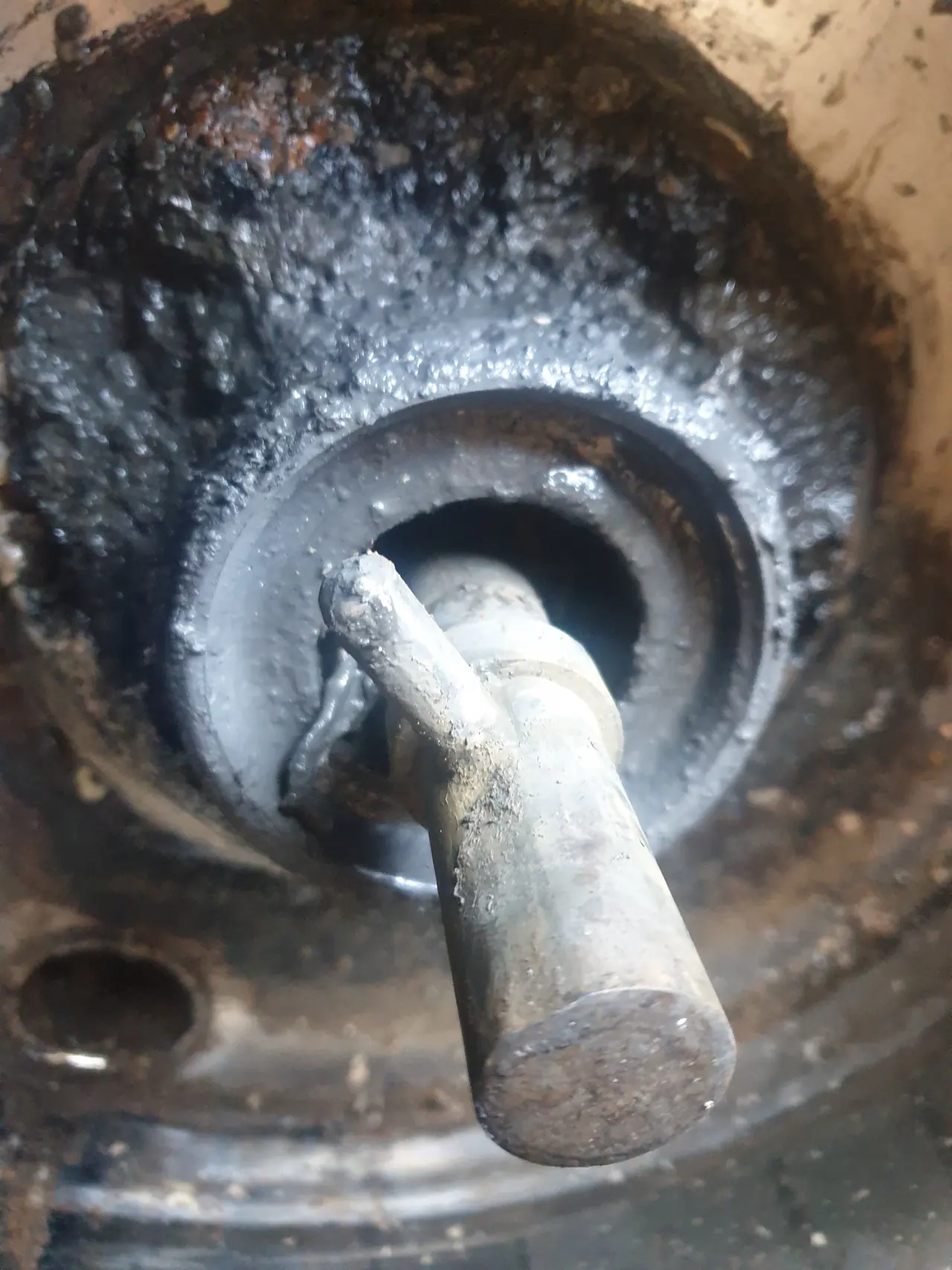
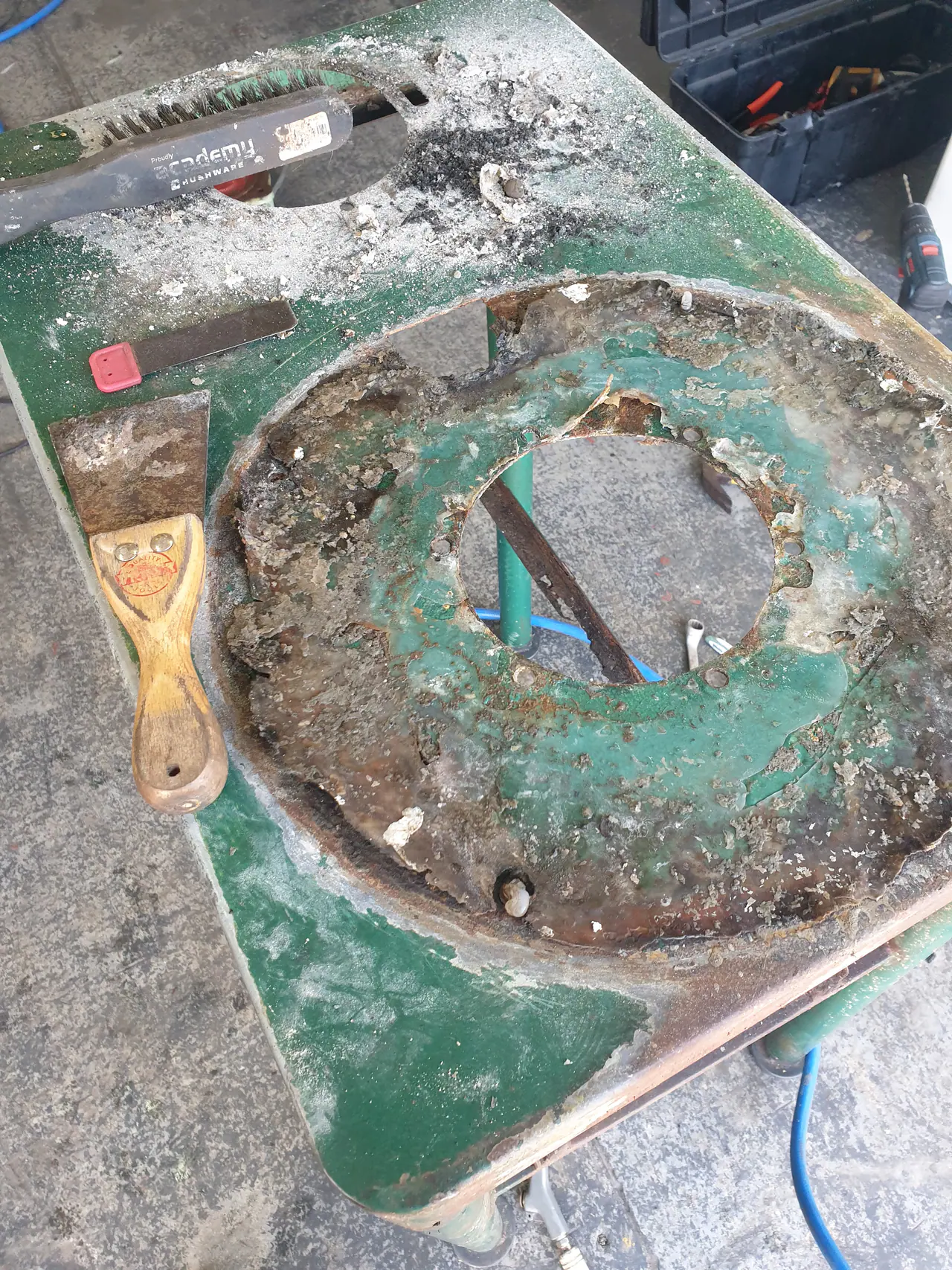
Potato peelers collect starch, grit, water residue and abrasive debris around the bowl, disc and drive area. Cleaning the machine properly is part of the repair because hidden buildup can damage bearings, belts and seals. Starch paste holds moisture against metal, while sand and peel residue behave like grinding compound around rotating parts.
 FixakitchenFood prep rebuild field notes
Potato peeler rebuild
Commercial potato peeler rebuild, belt and shaft repair
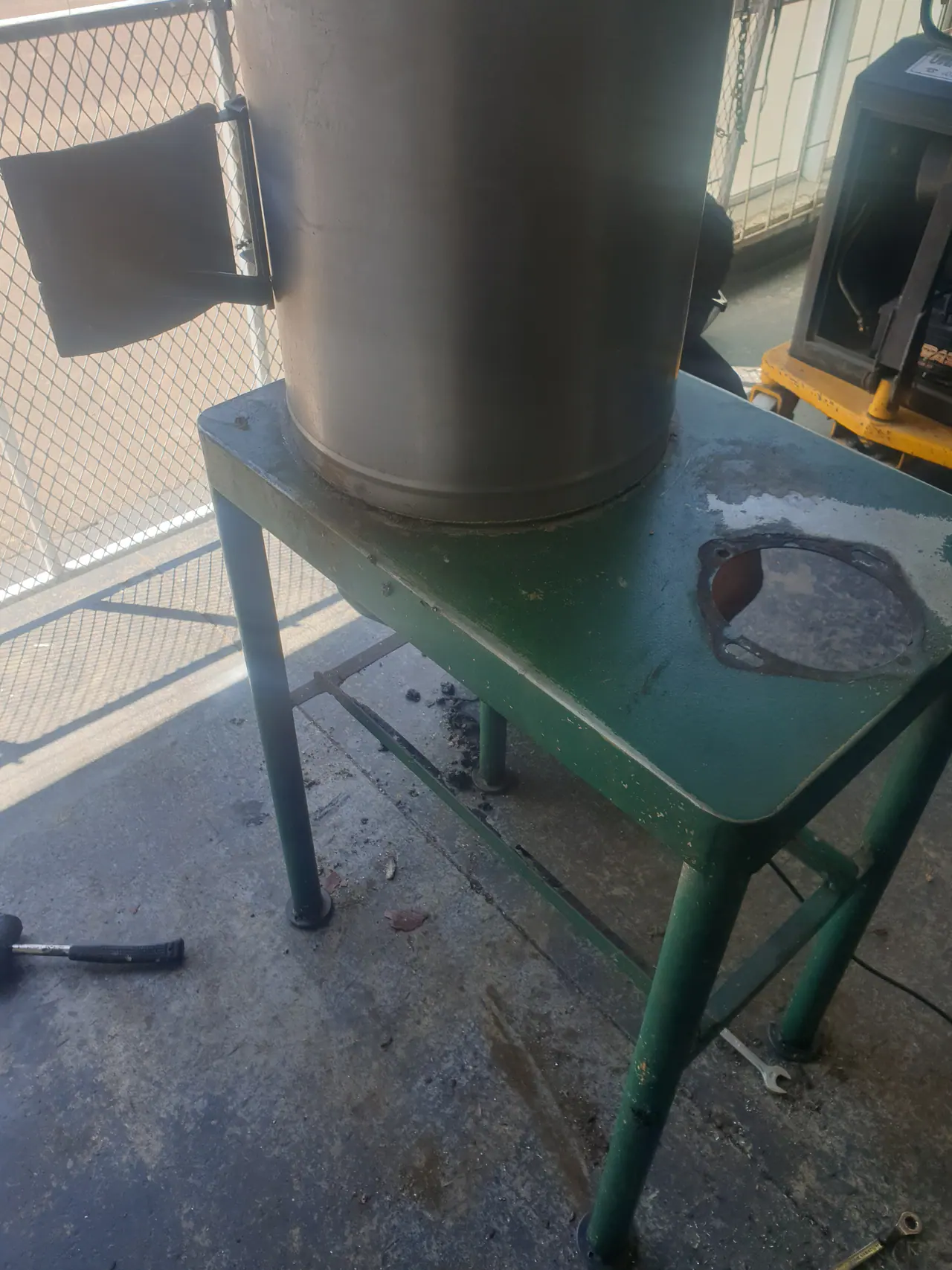
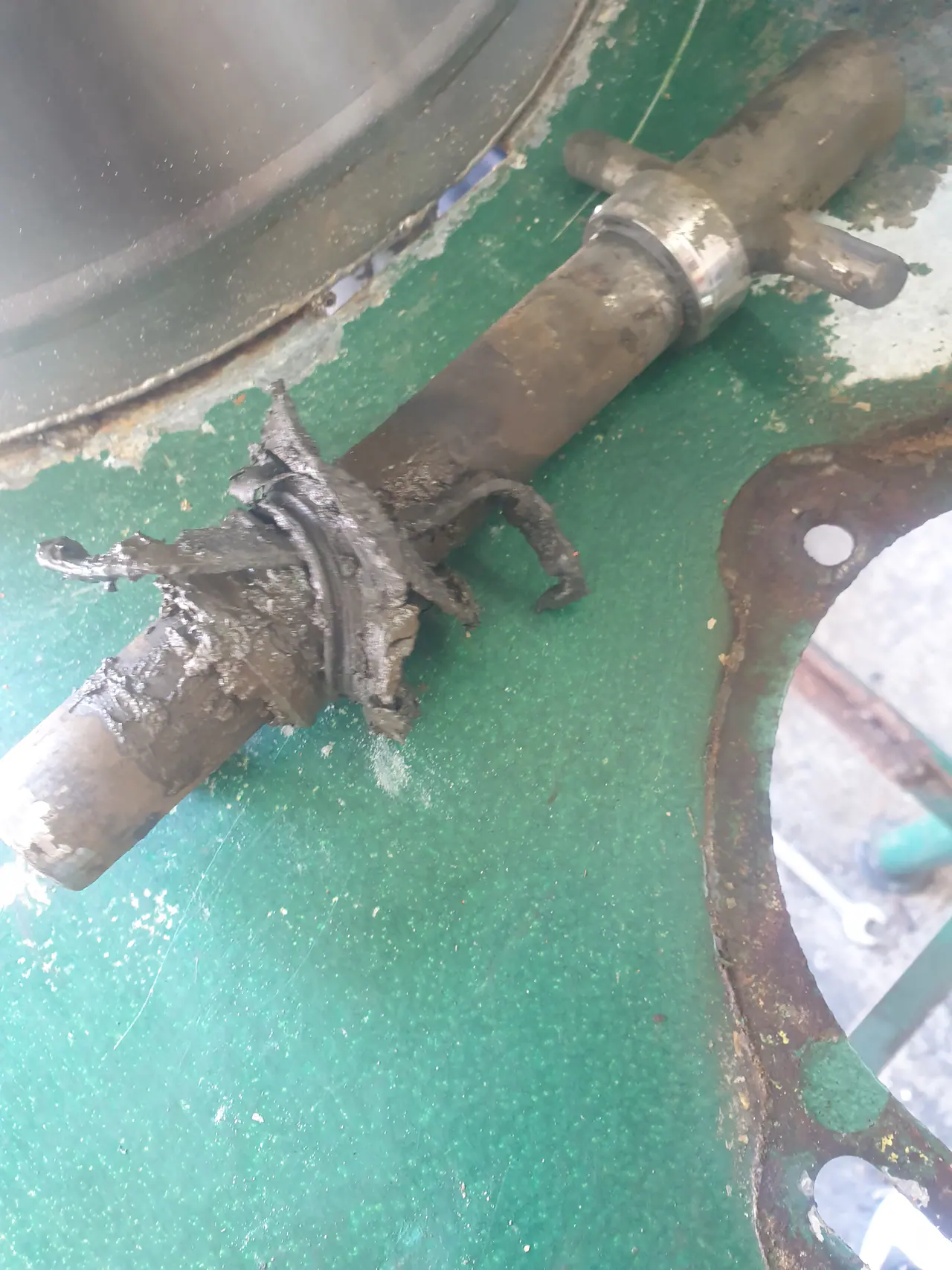
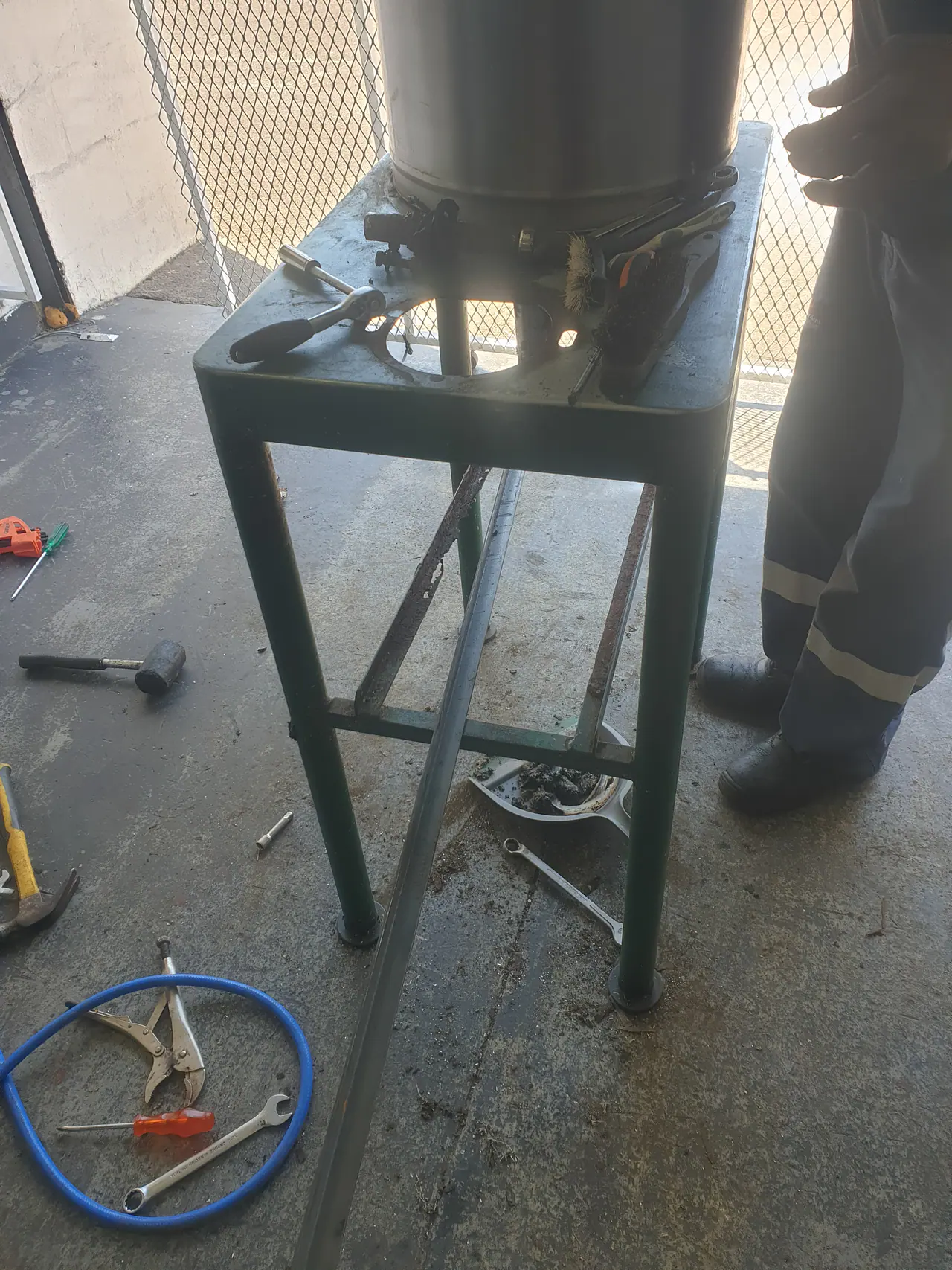
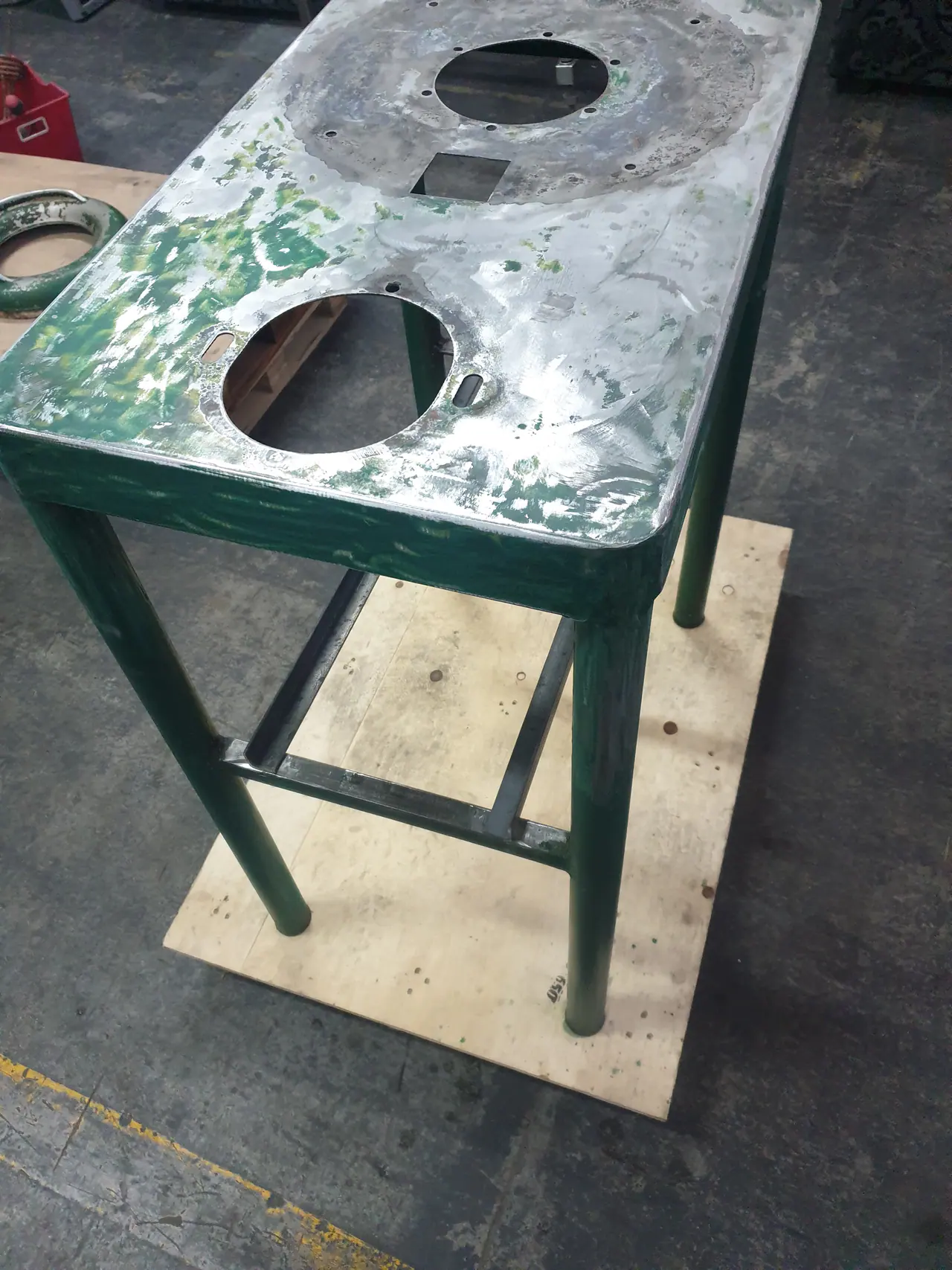
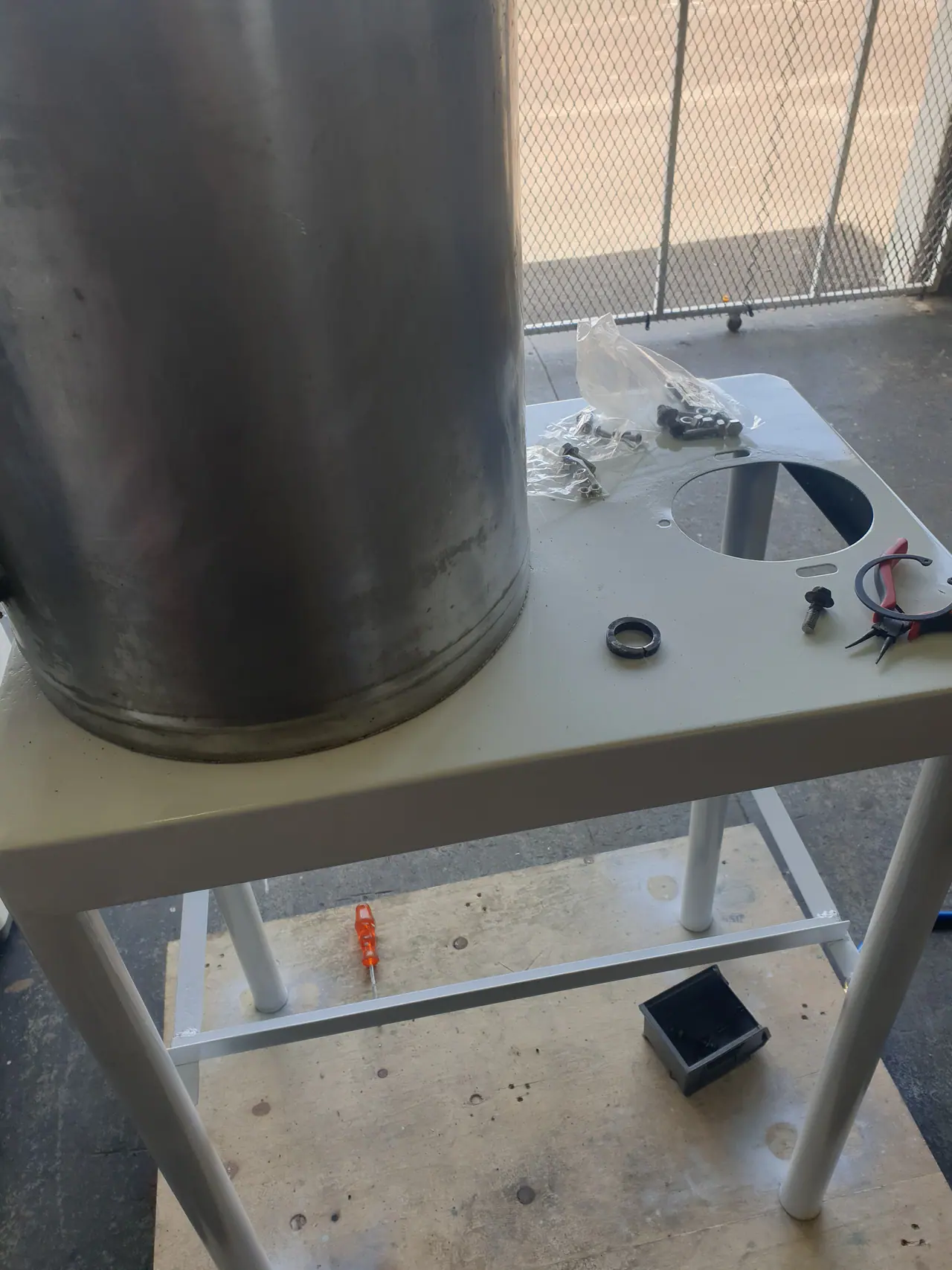
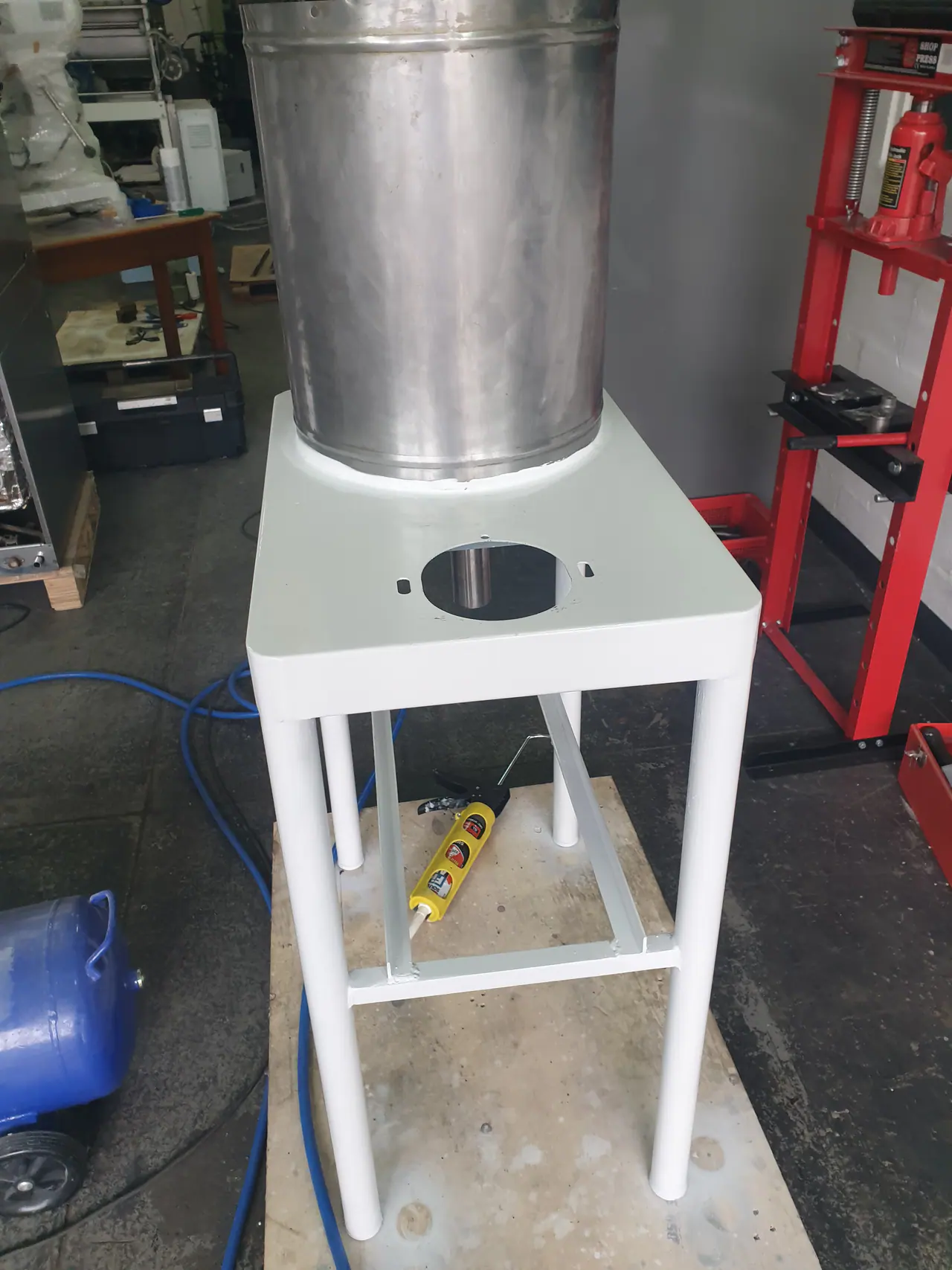
This potato peeler was fully rebuilt instead of being patched. The work included servicing the motor, changing the belt, repairing the shaft, cleaning out heavy residue, respraying the frame and returning the machine as a clean, practical piece of food-prep equipment. A peeler is a wet, abrasive machine, so the repair had to consider water, starch, grit, load transfer and electrical protection together.
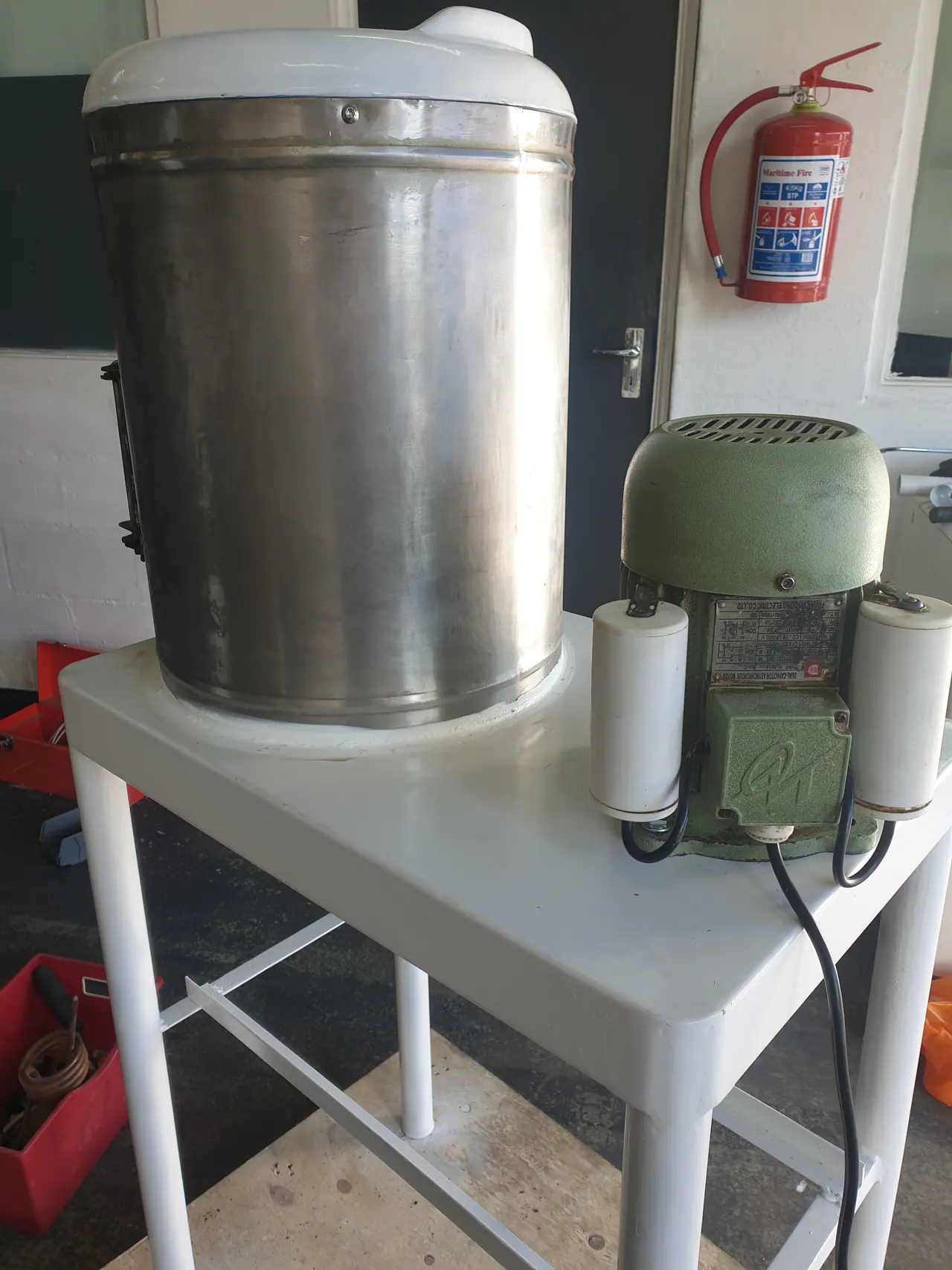
The motor and drive path were checked so the machine could start and run under load. A worn belt can slip, squeal, overheat or make the machine feel weak even when the motor itself is still usable. Belt tension is a balance: too loose wastes torque as heat; too tight overloads bearings and the motor shaft.
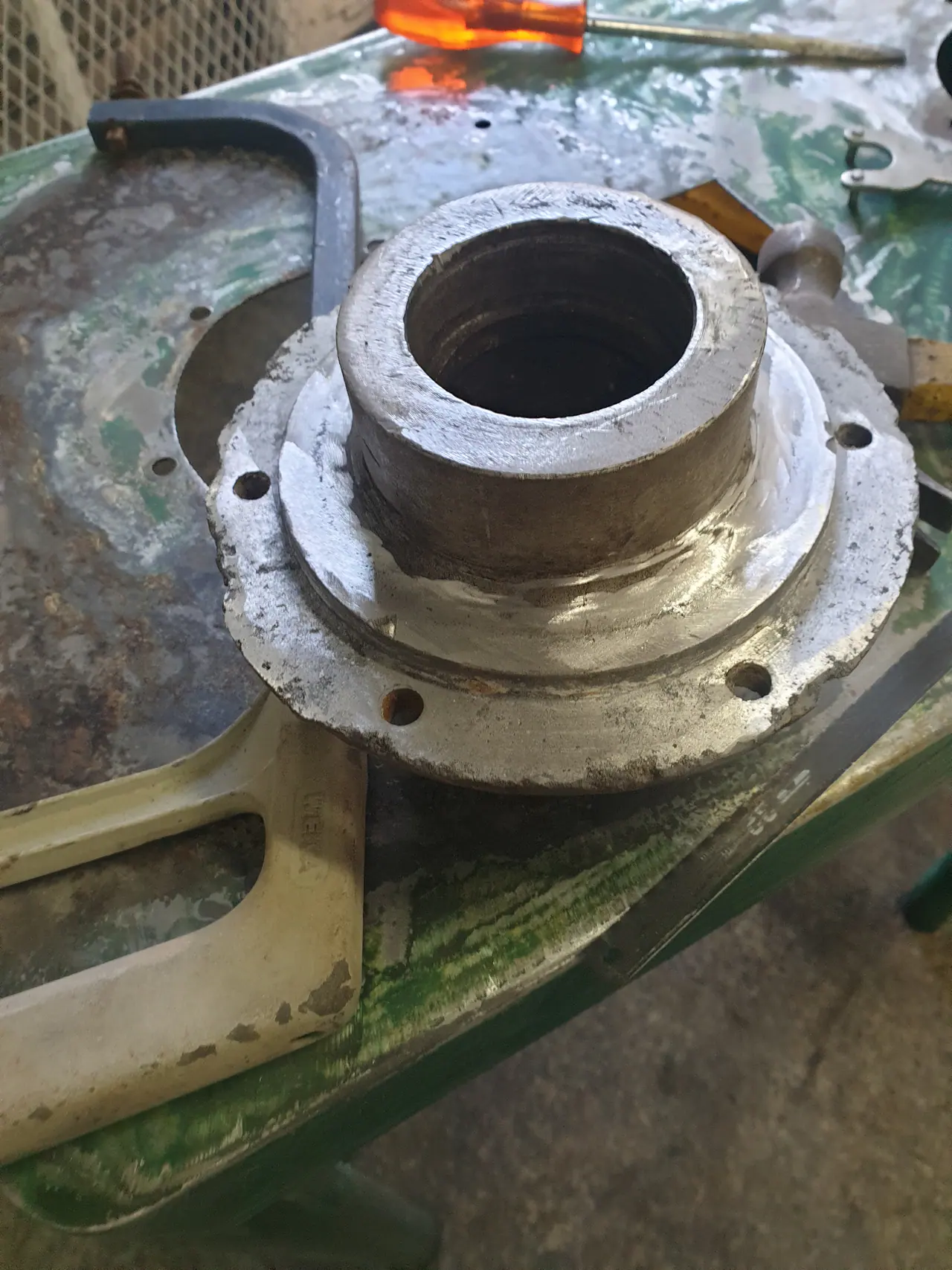
A damaged or loose shaft can make the peeling disc wobble, wear the belt unevenly and load the motor badly. Repairing the shaft helps the machine run smoother and reduces repeat failure. Once a rotating shaft runs off-centre, the machine creates vibration, and vibration slowly loosens fasteners, cracks mounts and shortens bearing life.
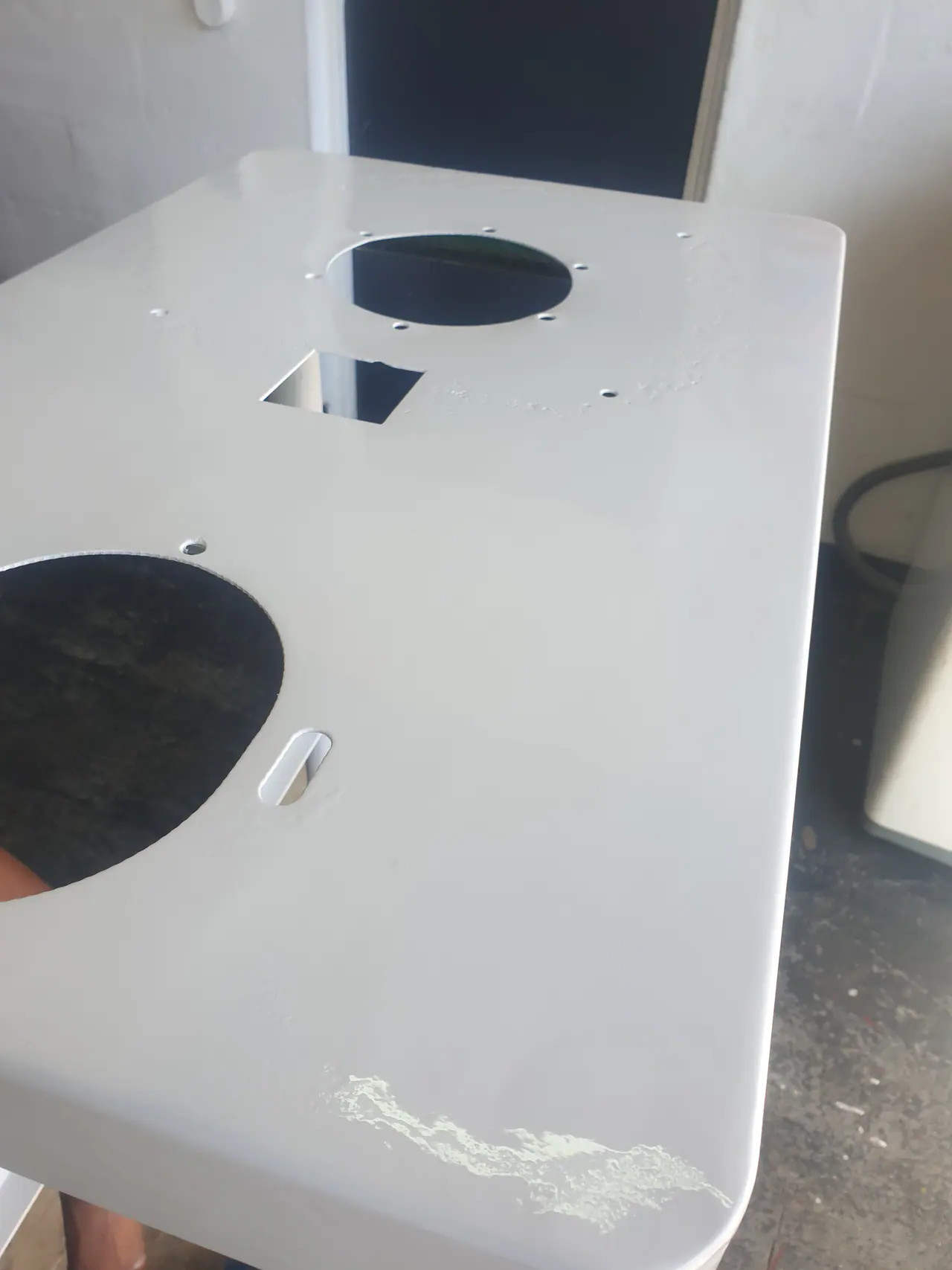
The frame and body were stripped back, prepared and resprayed. That gives the machine a cleaner working surface and makes future leaks, rust, cracks or movement easier to spot. Corrosion is not only cosmetic: it weakens mounting points and can create poor earth continuity around wet equipment if electrical bonding is ignored.
Machines like peelers live in wet, rough environments. Belts, motors, switches and shafts need to remain accessible for later servicing, so a rebuild has to balance cleanliness with serviceability. Drainage, cable routing and splash protection matter because water always finds the lowest point and the easiest path into a weak enclosure.
A full rebuild can be the sensible route when the machine frame and bowl are still worth saving. The correct repair treats the peeler as a system: motor, belt, shaft, bowl, water exposure and daily cleaning.
Repair notes signup
Get more food-prep rebuild notes
Sign up and Fixakitchen can send practical notes on food-prep equipment, motors, belts, shafts, refurbishments and commercial kitchen repairs.