Commercial ovens heat up, cool down and repeat that cycle day after day. The plastic around a selector switch is exposed to cabinet heat, radiant heat from the control area and heat generated by the electrical contacts. Over time, repeated expansion and contraction can make the plastic lose strength and become brittle.
 FixakitchenCommercial oven repair notes
Commercial oven controls
Why oven selector switches become brittle and fail
An oven selector switch is a mechanical and electrical part working in a hot environment. After years of switching loads on and off, it is not strange to find heat-stressed plastic, worn contacts or a switch body that has become brittle enough to crack.
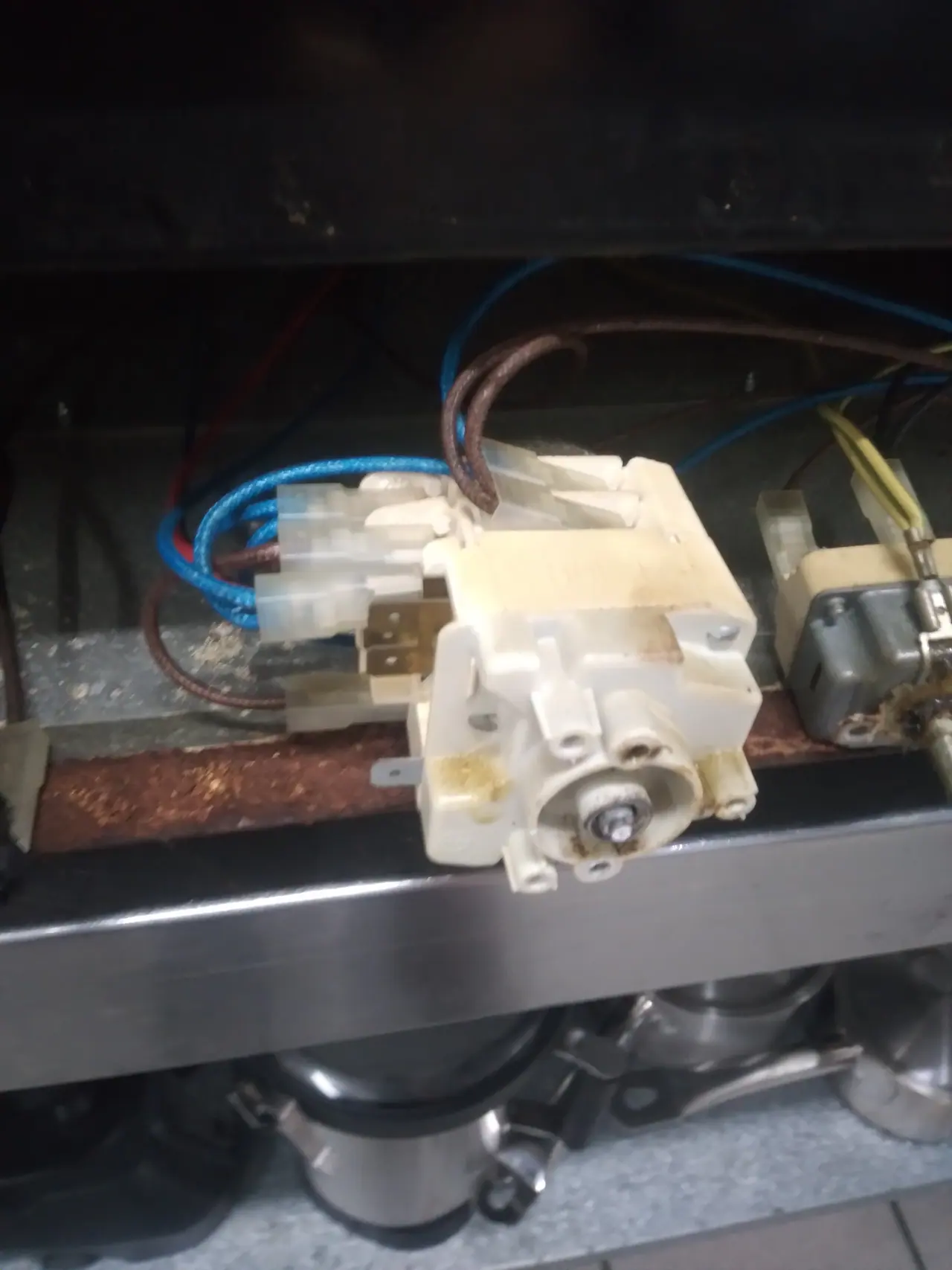
A selector switch is not only a knob. Inside, contacts open and close to route power to elements, fans, thermostats, indicator lights or control circuits. Every time current flows through a contact, a small amount of heat is produced. If the contact surface becomes worn, dirty or loose, resistance increases, and that extra resistance creates more heat at the switch.
In a busy restaurant or bakery oven, two years can mean thousands of switching operations. If the oven runs long services, high temperatures and repeated start-stop cycles, the selector switch may age faster than people expect. Failure after consistent use is not automatically unusual; it depends on load, duty cycle, ventilation, wiring condition and switch quality.
The switch should not be replaced blindly. The terminals, wiring, crimp tension, signs of arcing, element current, thermostat operation and heat path around the control panel should be checked. A new switch fitted onto heat-damaged wiring or loose terminals can fail again because the original electrical heat problem is still present.
Repair notes signup
Get more oven control fault notes
Sign up and Fixakitchen can send practical field notes on commercial oven controls, electrical heat stress and maintenance warning signs.