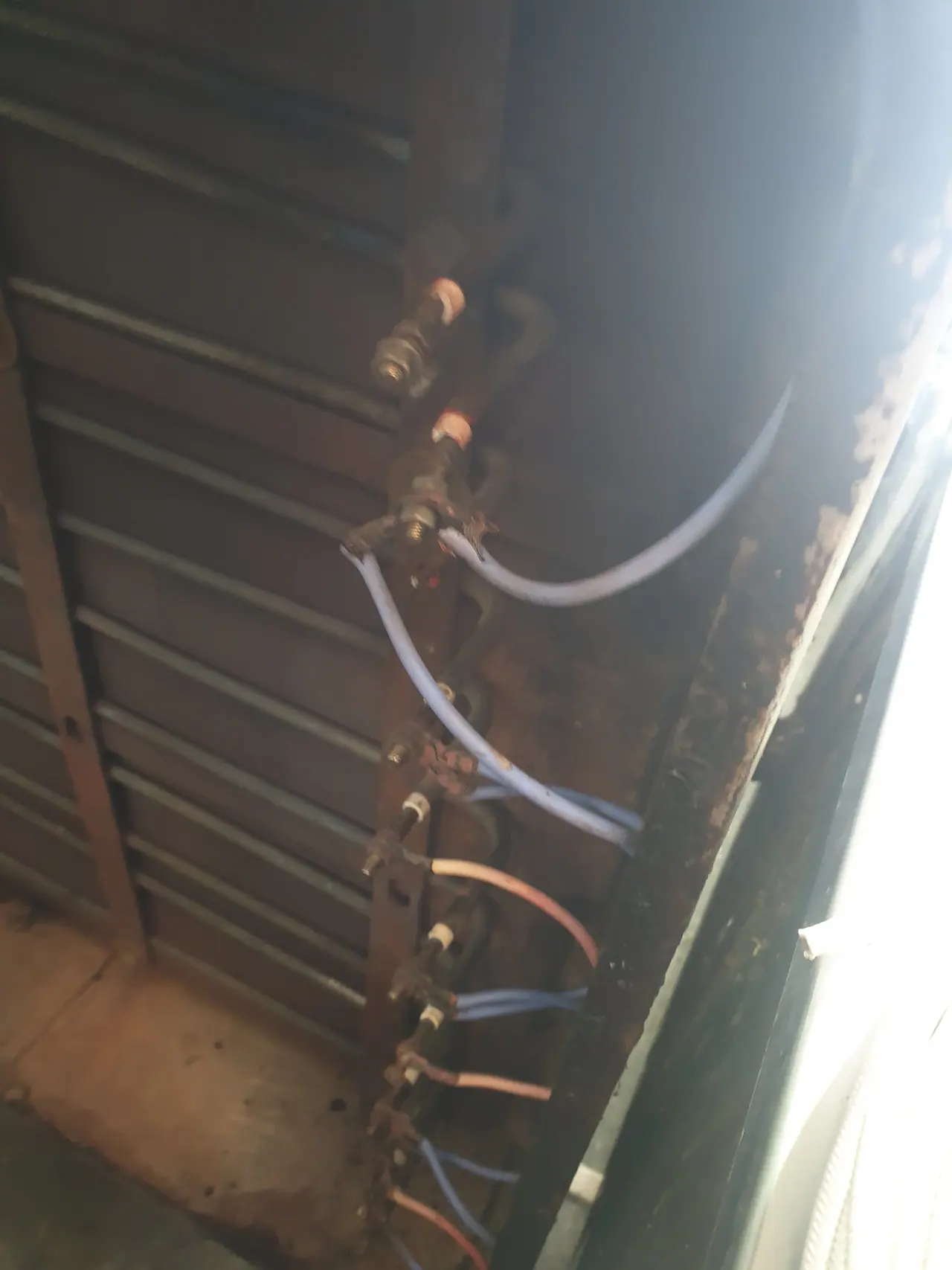
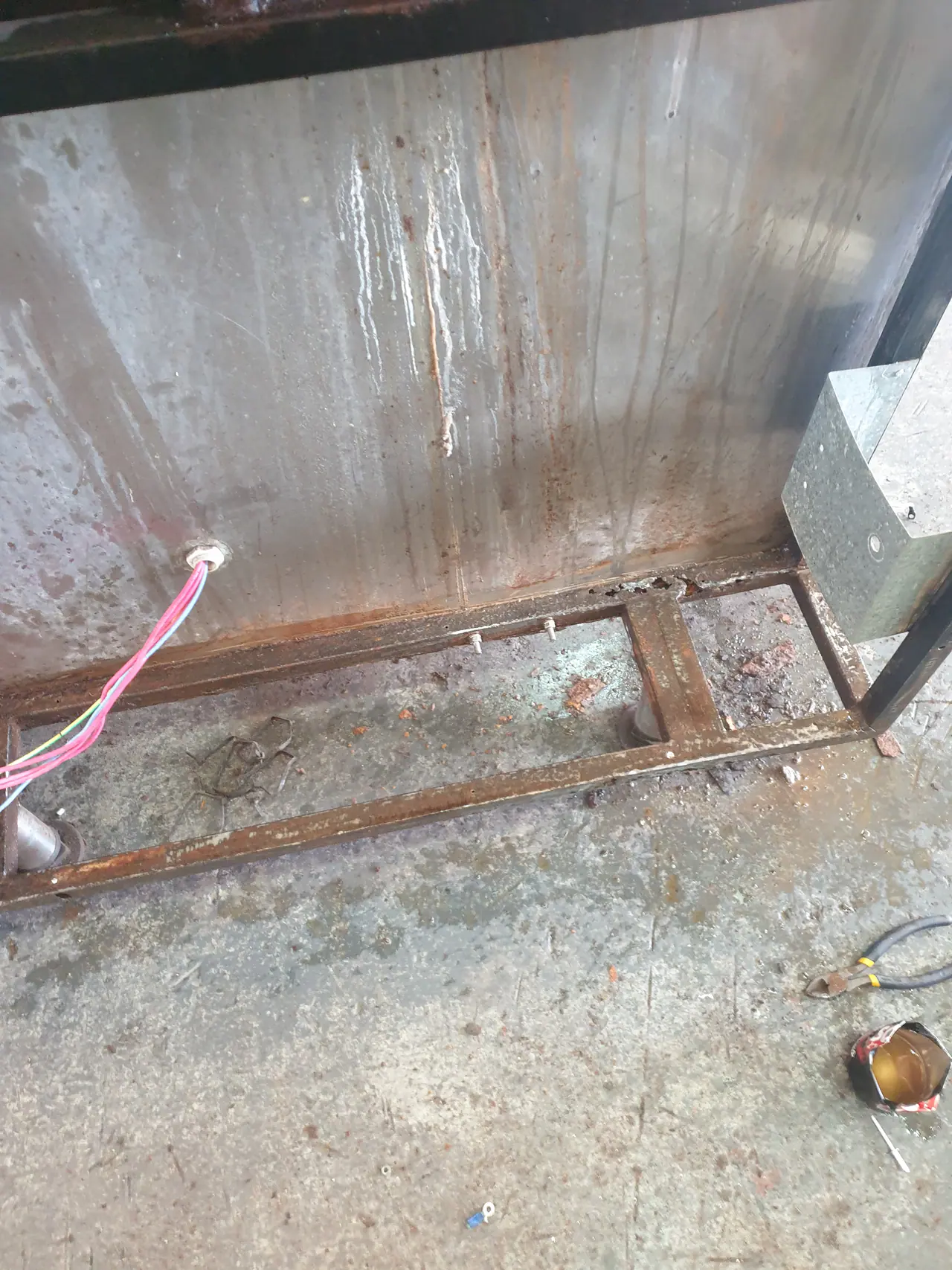
The original wiring and control layout showed the normal wear that comes from heat, moisture, movement and repeated service work. Before fitting new control parts, the circuit had to be traced, cleaned up and rebuilt so the heating elements and safety path could be trusted again. Loose terminals create resistance, and resistance under load becomes heat at exactly the place where the connection is already weakest.
 FixakitchenCustom equipment field notes
Tilt pan retrofit
Modified tilt pan rebuild with LCD temperature control
This tilt pan needed more than a quick repair. The job included rebuilding, rewiring, custom fitting and upgrading the control side with an LCD temperature controller and solid state relays so the heating load could be switched cleanly and reliably. A tilt pan is a high-current heating appliance, so temperature sensing, switching, cable sizing and heat management all have to be treated as one system.
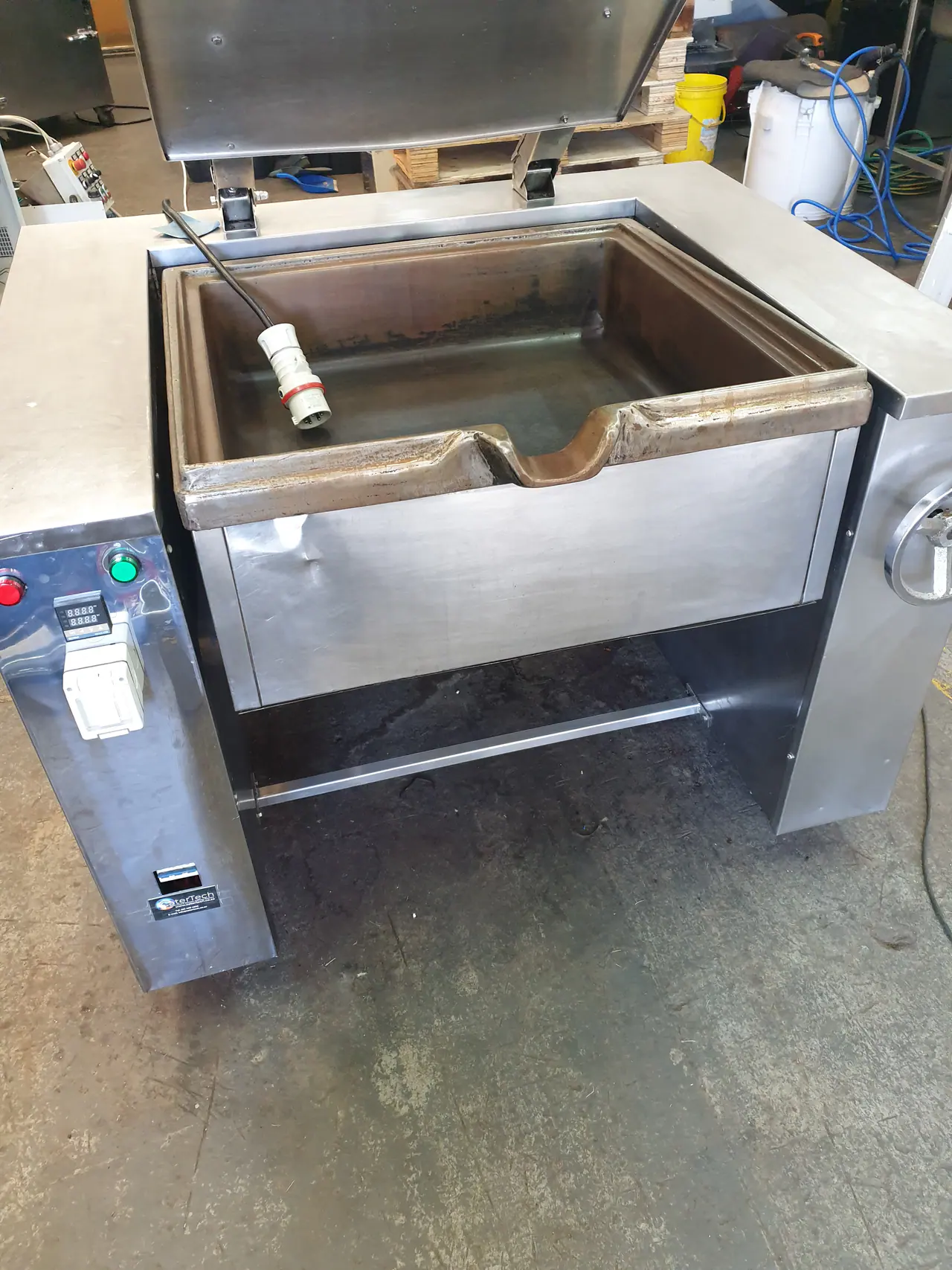
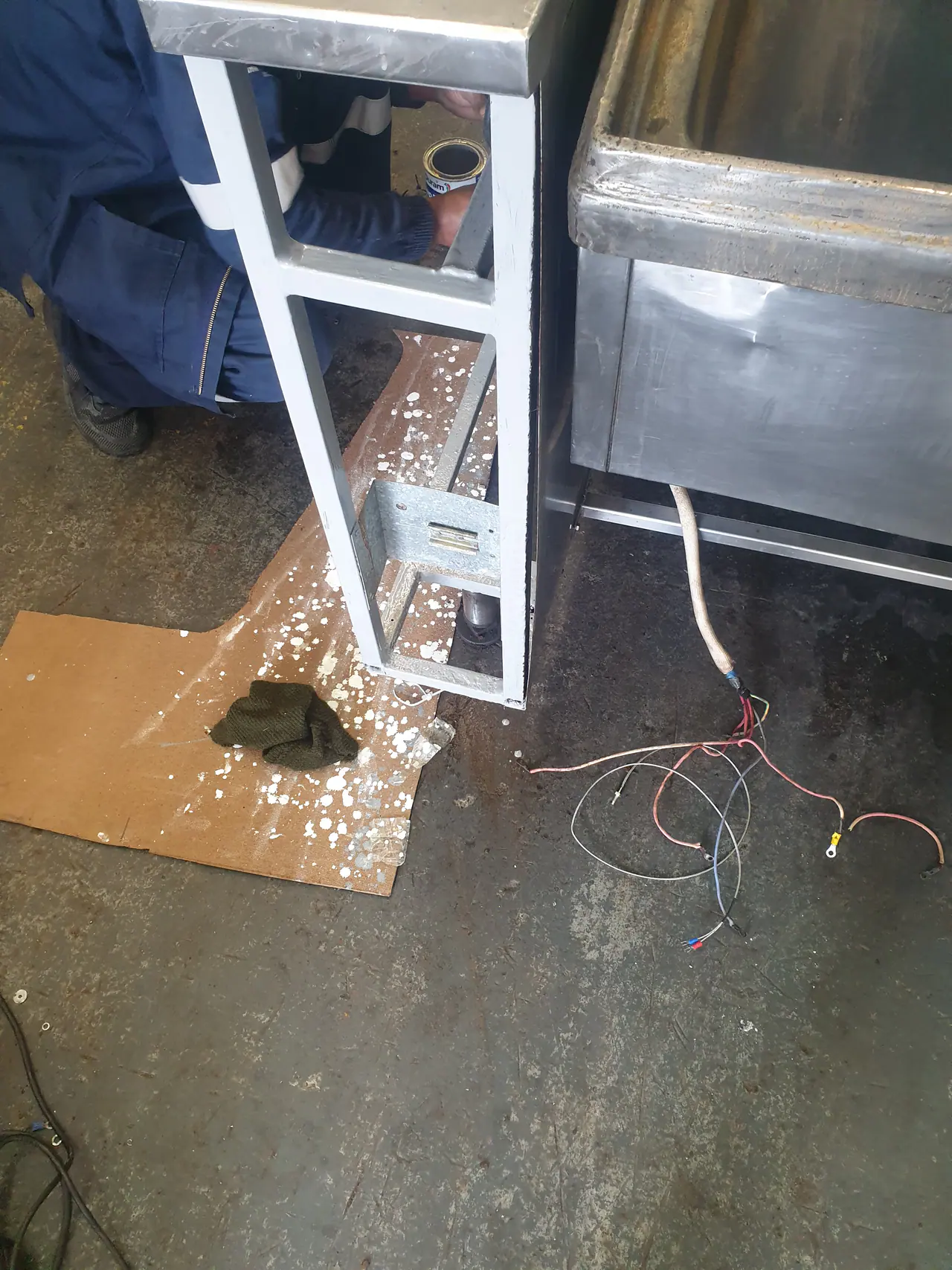
A tilt pan is not only an electrical appliance. The pan body, frame, stainless covers, cable routing and control panel all affect the final repair. Custom fitting made space for the new controller while keeping the machine practical to use and service. Heat rises from the pan, water runs downward during cleaning, and vibration travels through the frame, so component placement matters.
The LCD temperature controller gives a clear setpoint and live temperature reading. That makes the machine easier to operate and easier to diagnose later, especially when compared with vague or worn analogue controls. The controller is reading a sensor signal and comparing it to the setpoint; if the sensor placement is wrong, the displayed temperature can be accurate at the probe but wrong for the cooking surface.
Solid state relays allow the controller to switch the heating load without relying on small mechanical contacts inside the temperature controller. Correct sizing, heat management and wiring are important because the relay is carrying real element current. An SSR drops a small voltage while conducting; that voltage drop becomes heat, so the relay needs a proper current rating and a way to shed heat.
A retrofit is only useful if the next technician can understand it. The control layout, wiring routes, terminals and access points were arranged so future testing can be done without dismantling half the machine.
When older commercial cooking equipment has a solid body but poor controls, a careful retrofit can be better than chasing repeated small faults. The key is to treat the appliance as one system: heat, metal, wiring, switching and daily operator use. The repair is successful only when the controller, sensor, relay, elements and safety path all behave correctly under real cooking load.
Repair notes signup
Get more retrofit and control notes
Sign up and Fixakitchen can send practical notes on commercial cooking equipment, custom controls, rewiring and solid state relay retrofits.