A hotplate element is controlled resistance. It does not heat because the wire is loose or because power is just present; it heats because current is forced through a resistive material and electrical energy is converted into heat. Ohm's law links the basics: current equals voltage divided by resistance, and heat power is voltage squared divided by resistance.
 FixakitchenHotplate rewire field notes
Hotplate rewire
Commercial hotplate rewire and parallel heating element resistance
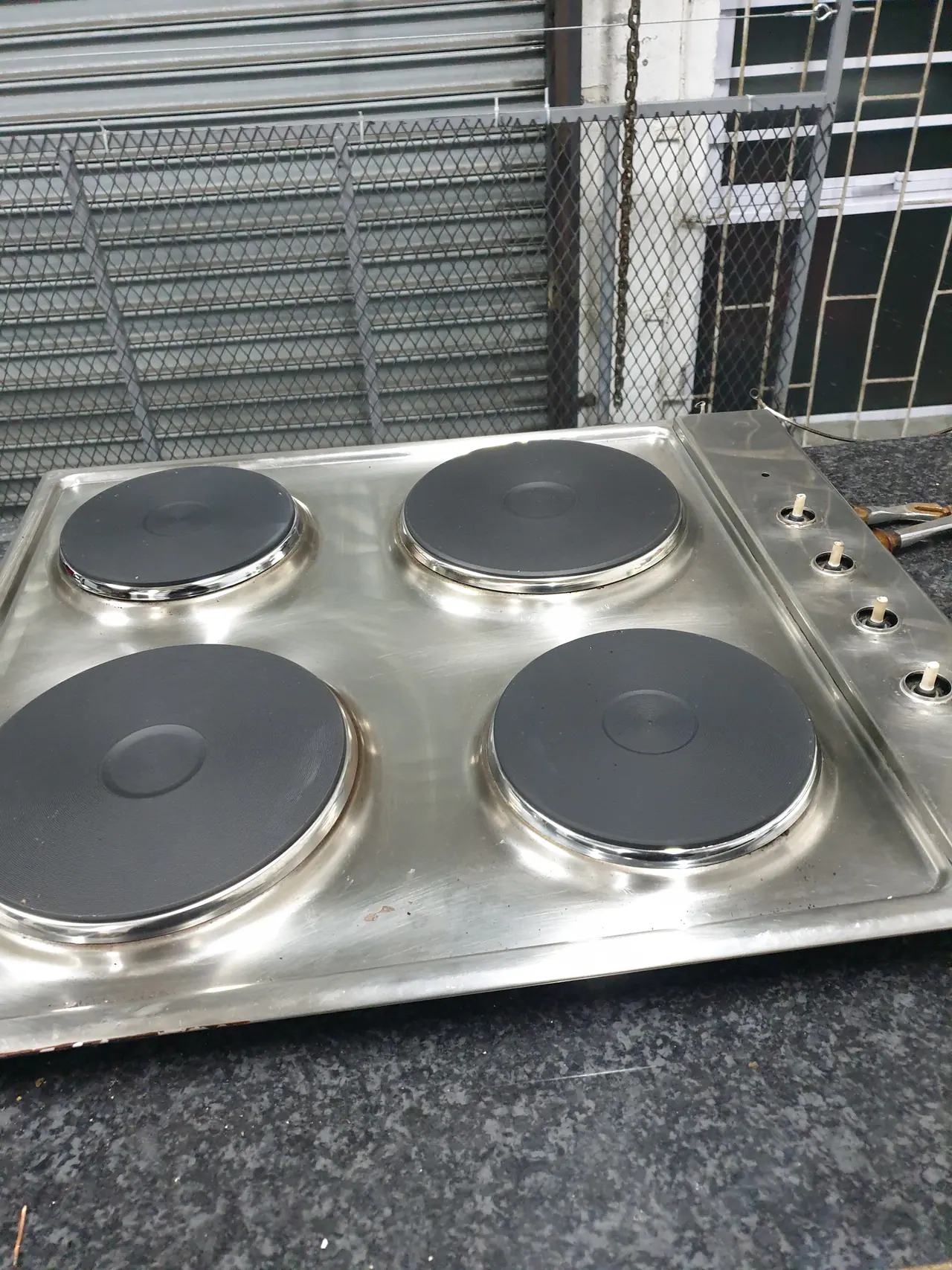
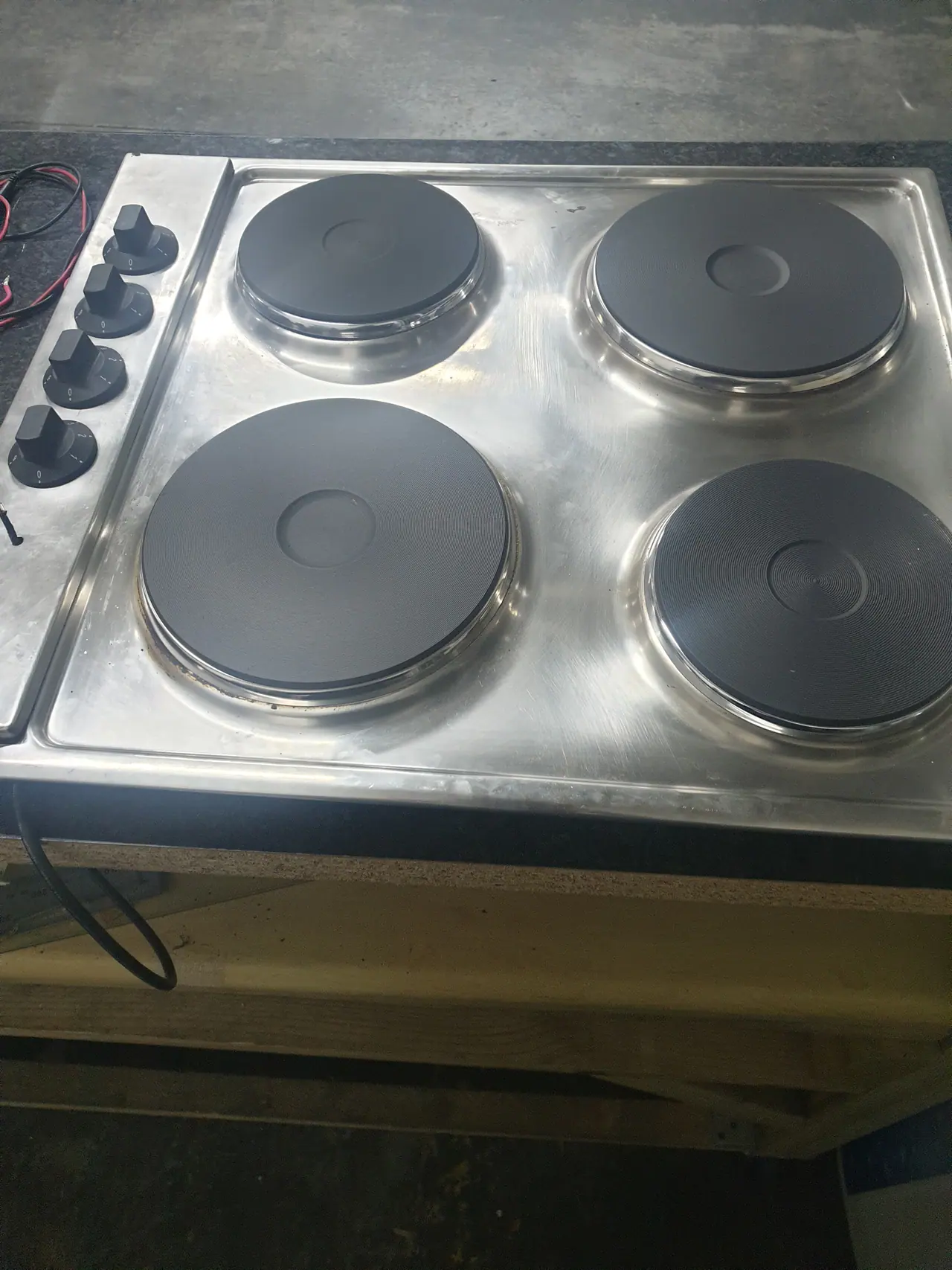
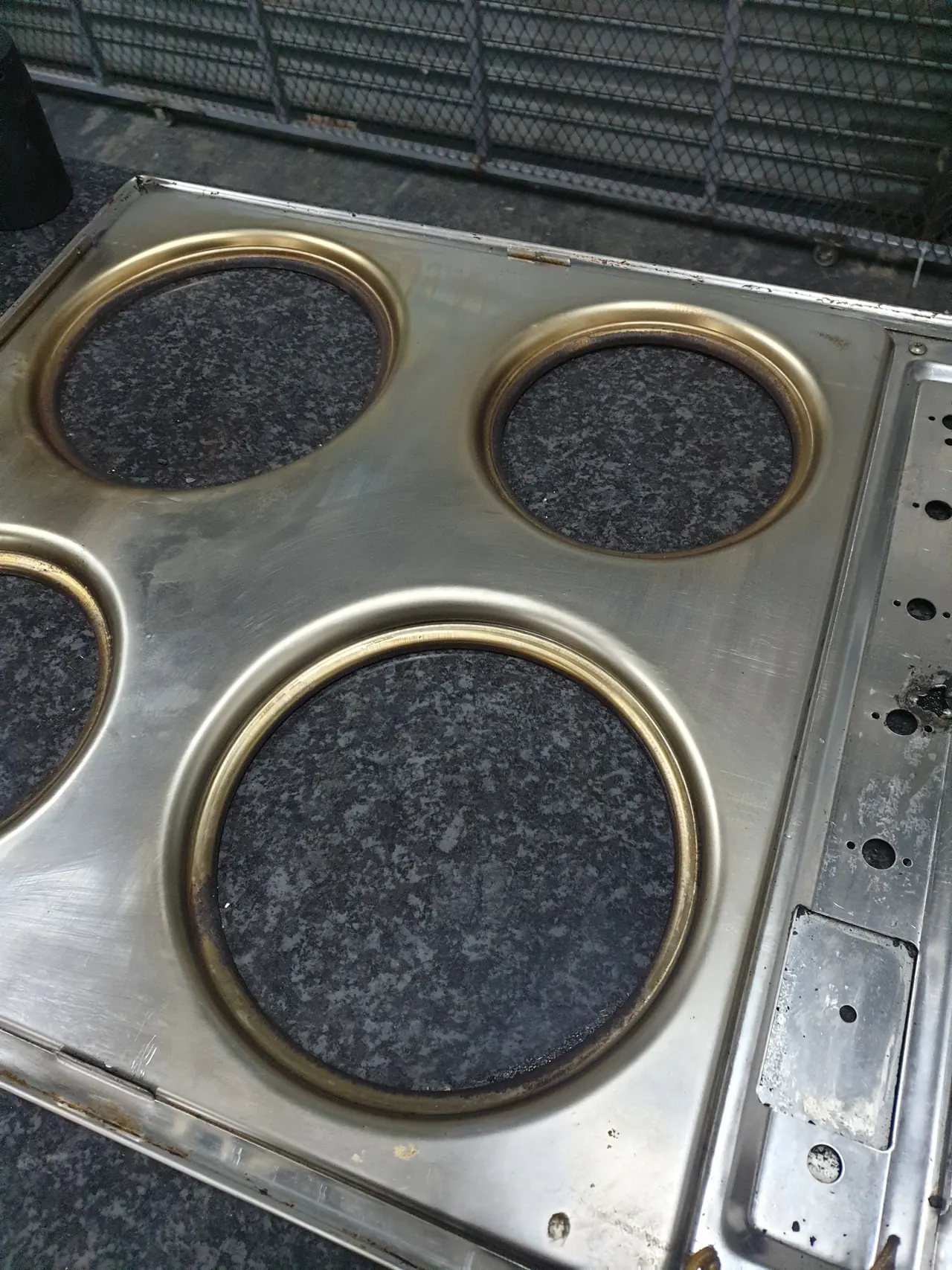
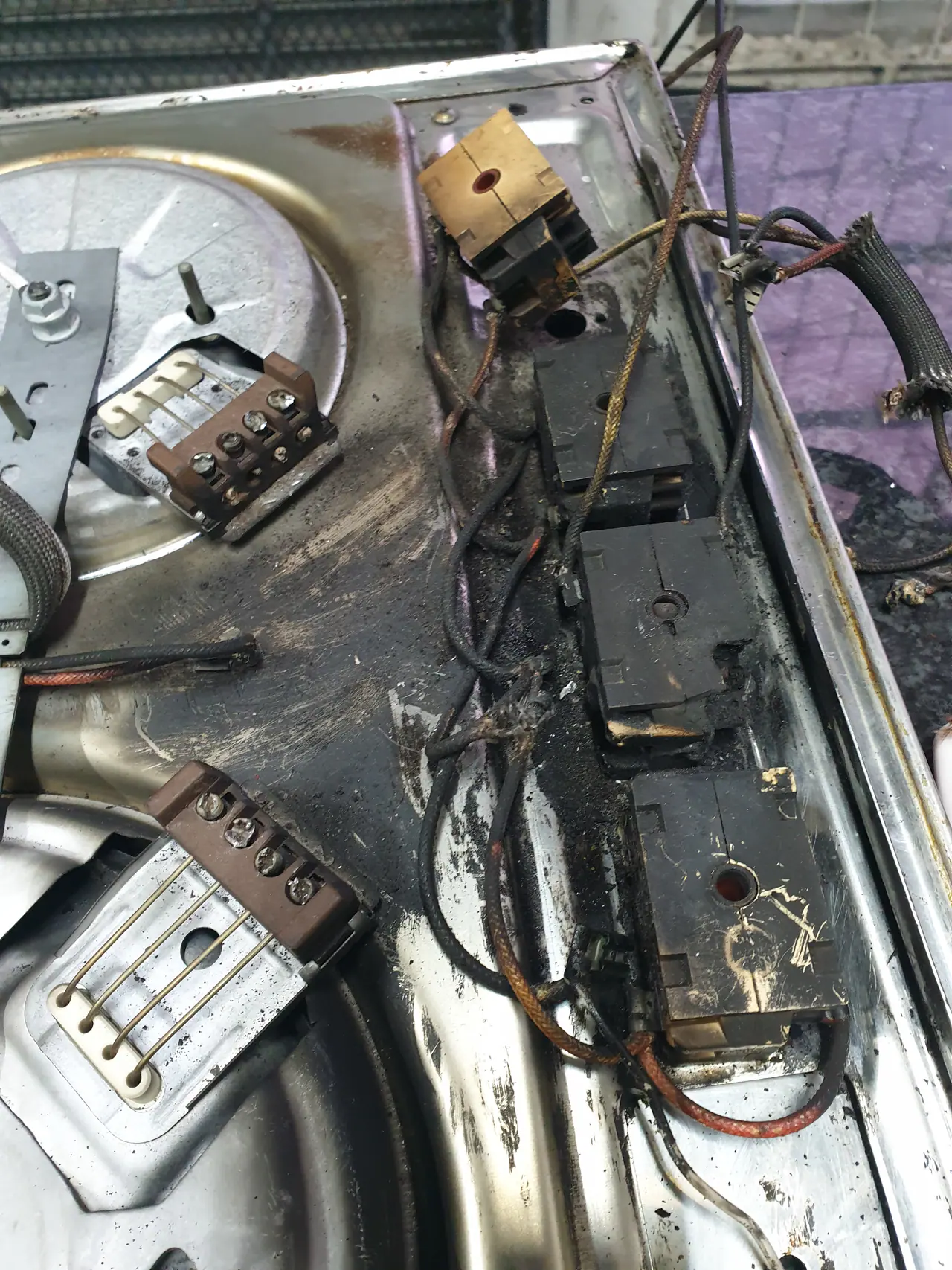
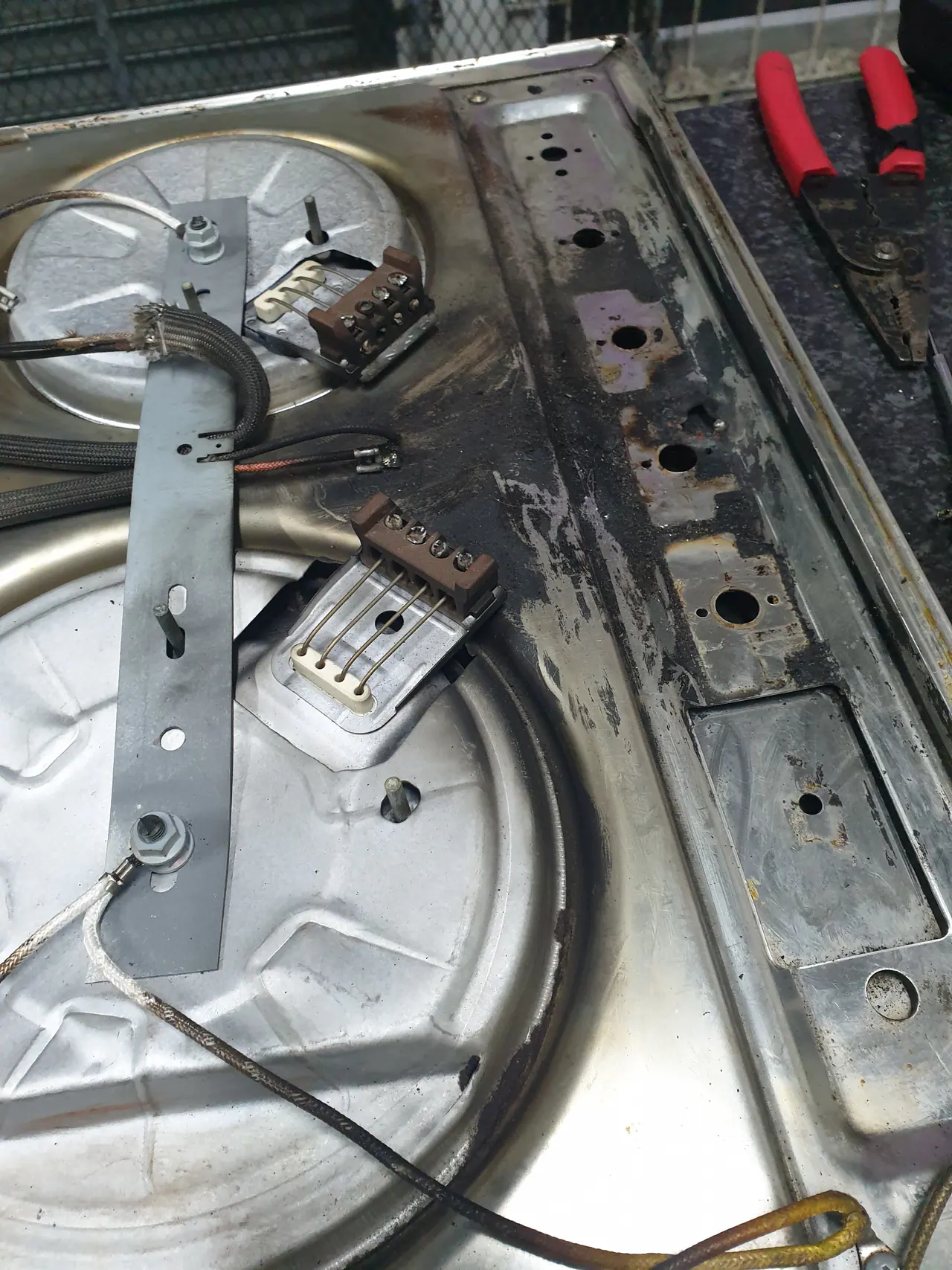
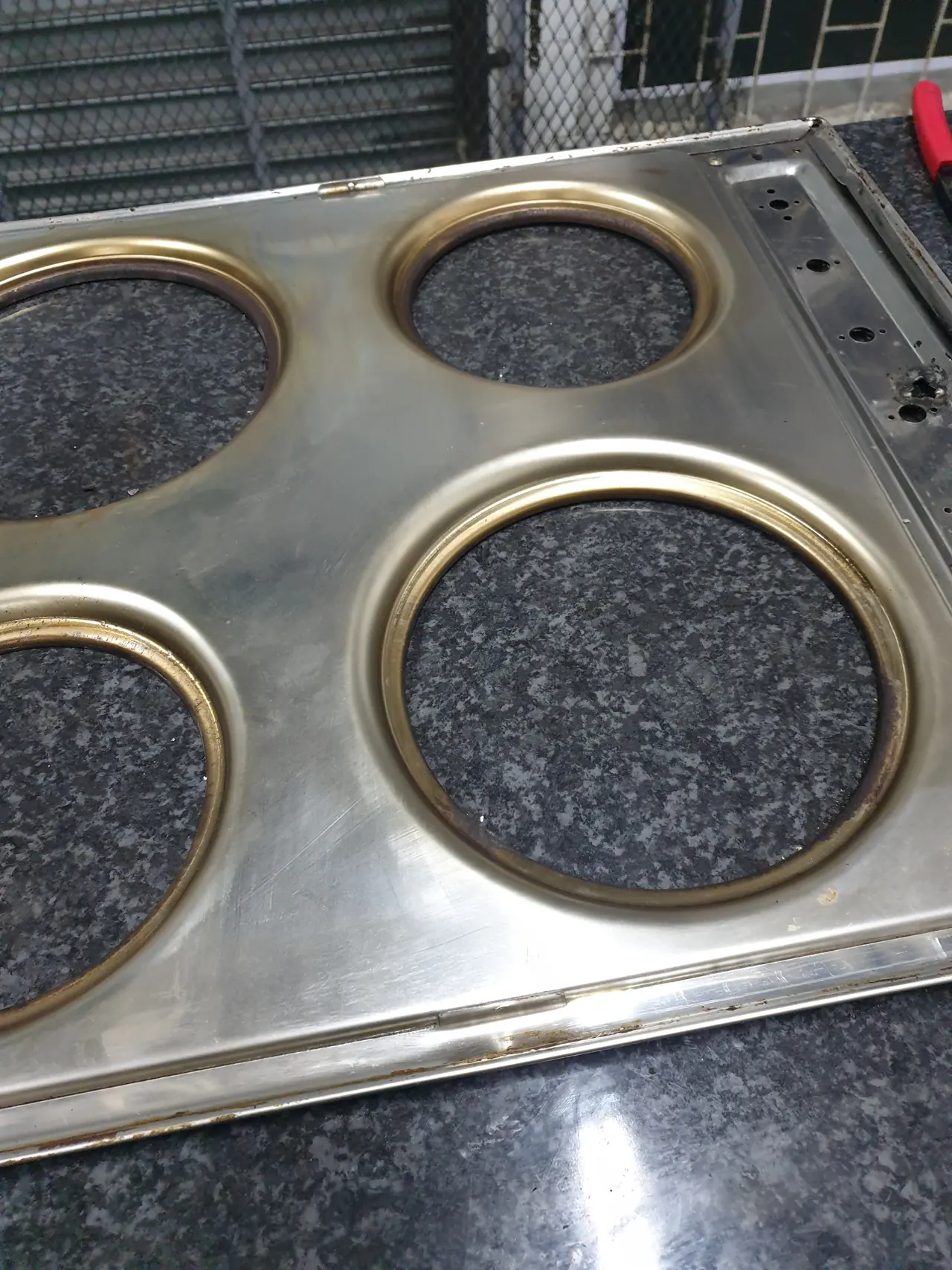
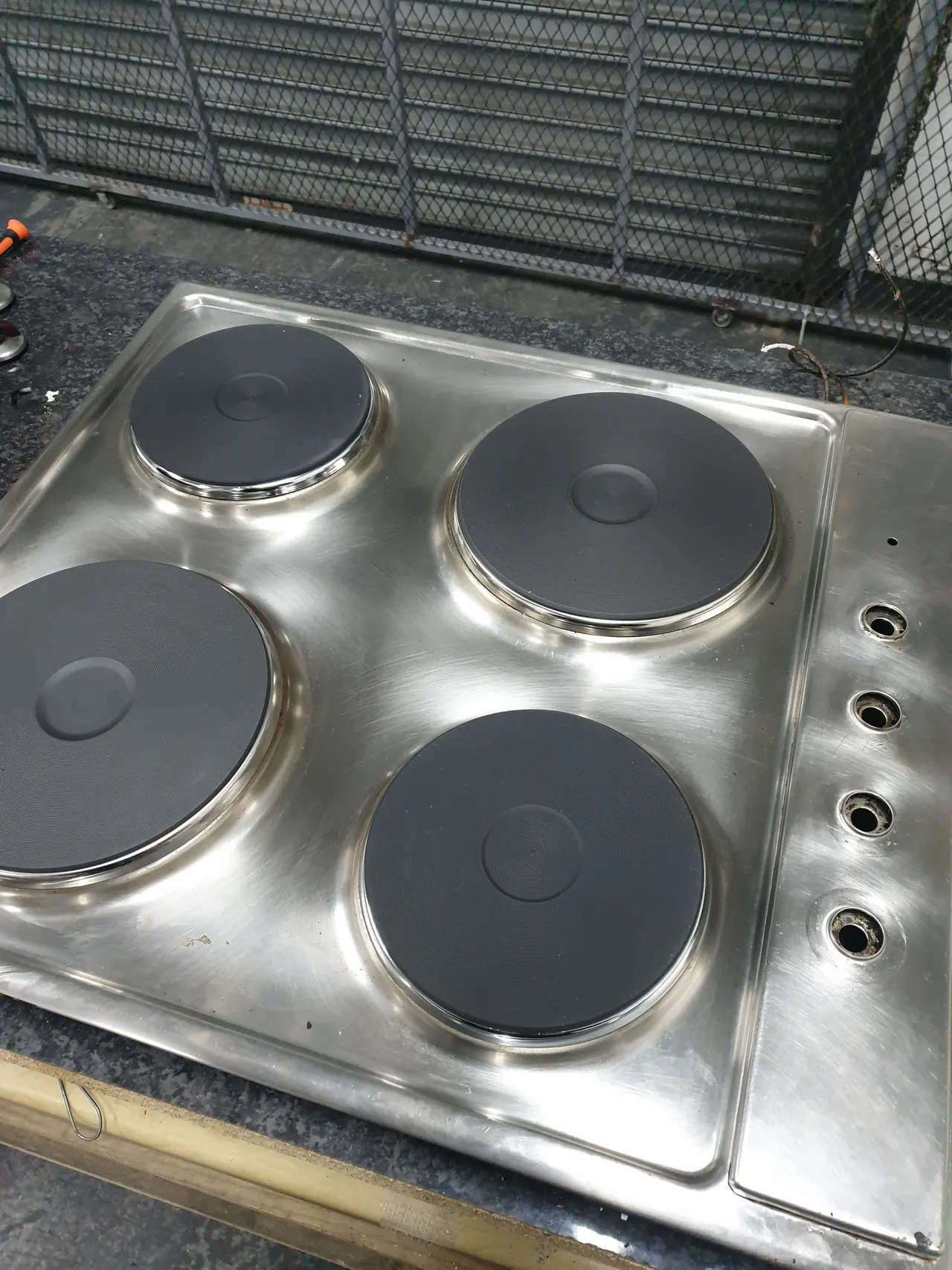
This commercial hotplate was rewired as a special request. The interesting part is how the heating plates behave electrically: each element is a resistive load, and when multiple elements are wired in parallel the total resistance drops while total current draw rises. That is why terminals, switches, cable size, earth bonding and load testing matter so much on cooking equipment.
Quick answer
What changes when hotplate elements are wired in parallel?
Each parallel element receives the full supply voltage. Adding another branch lowers the circuit's total resistance and increases the total current drawn, although current through each individual branch still depends on that element's resistance. Cables, terminals, switches and protective devices therefore have to suit the combined load.
In a parallel hotplate circuit, each plate gets the full supply voltage. The total resistance is not added like a chain; it is found from the combined branch paths. Add more parallel elements and the total resistance goes down, which means the machine can pull more total current from the supply when several plates are switched on.
Each element branch takes current according to its own resistance. A lower-resistance element branch draws more current than a higher- resistance branch at the same voltage. That is normal when the element is designed for it, but a damaged element, wrong replacement part or poor connection can shift the load and create overheating.
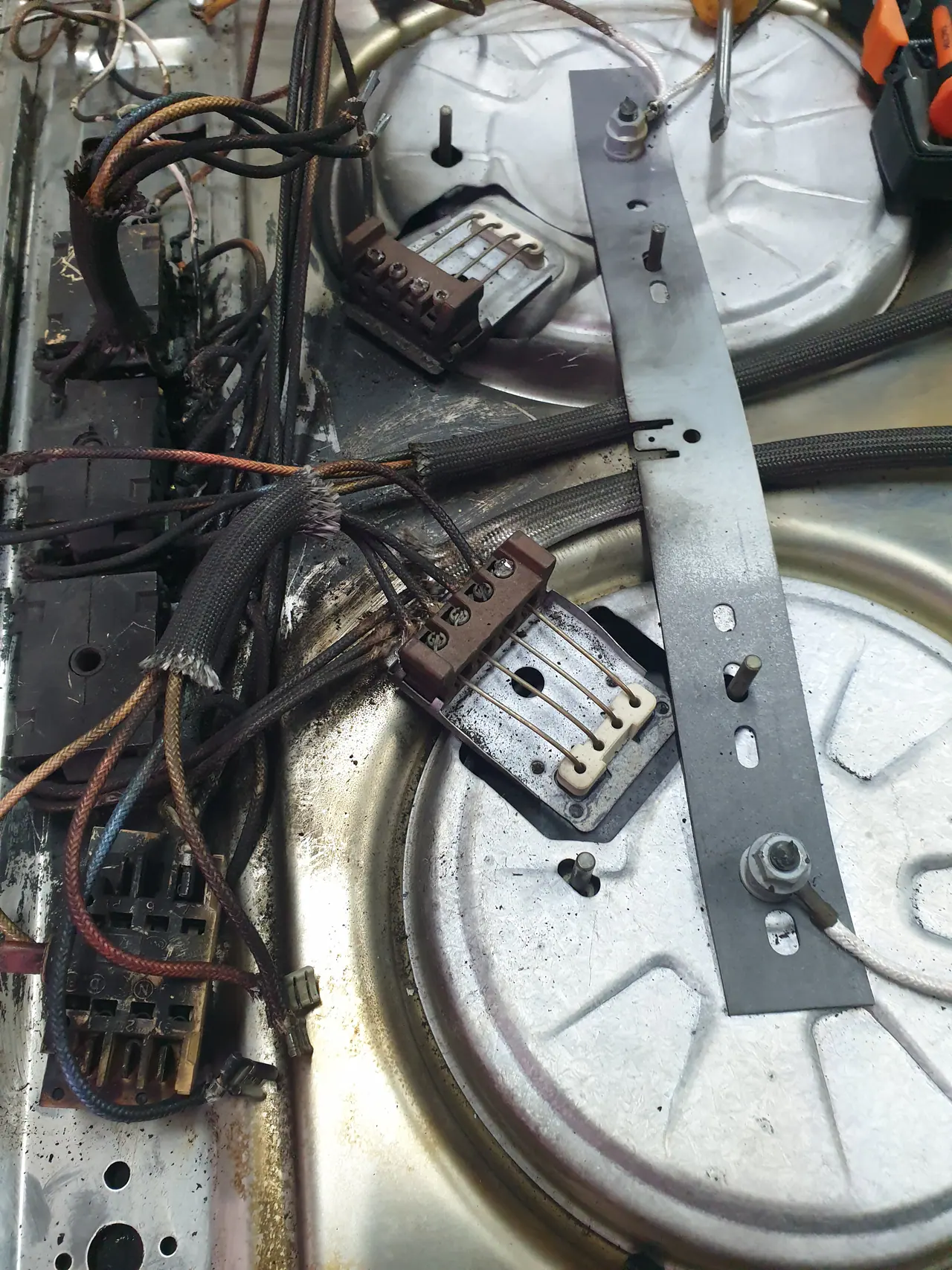
A terminal should pass current with very little resistance. If a screw is loose, oxidised or heat damaged, that small connection resistance becomes its own heater. Current through a weak joint produces I-squared-R heating, so a bad terminal can char insulation, soften connectors and make the fault get worse every time the hotplate cycles.
The selector switch, simmerstat, thermostat or contactor does not only need to fit physically. It must be rated for the current the hotplate can draw when the selected elements are on. Resistive loads are cleaner than motor loads, but the contacts still arc when opening and closing, especially if the machine is switching several high-wattage plates.
A proper hotplate rewire is not just connecting wires in the same shape as before. It needs continuity checks, insulation resistance thinking, earth continuity, secure ceramic terminal work, heat-resistant cable routing and a load test so the current draw and temperature rise make sense under real cooking conditions.
Cape Town repair support
Need a commercial hotplate assessed?
Send a photo of the hotplate, data plate, controls and damaged wiring, together with the supply voltage and fault symptoms. Do not energise equipment with charred terminals, exposed conductors or failed earthing.
Repair notes signup
Get more electrical repair notes
Sign up and Fixakitchen can send practical notes on hotplates, elements, resistance, terminals, switching faults and commercial cooking equipment.