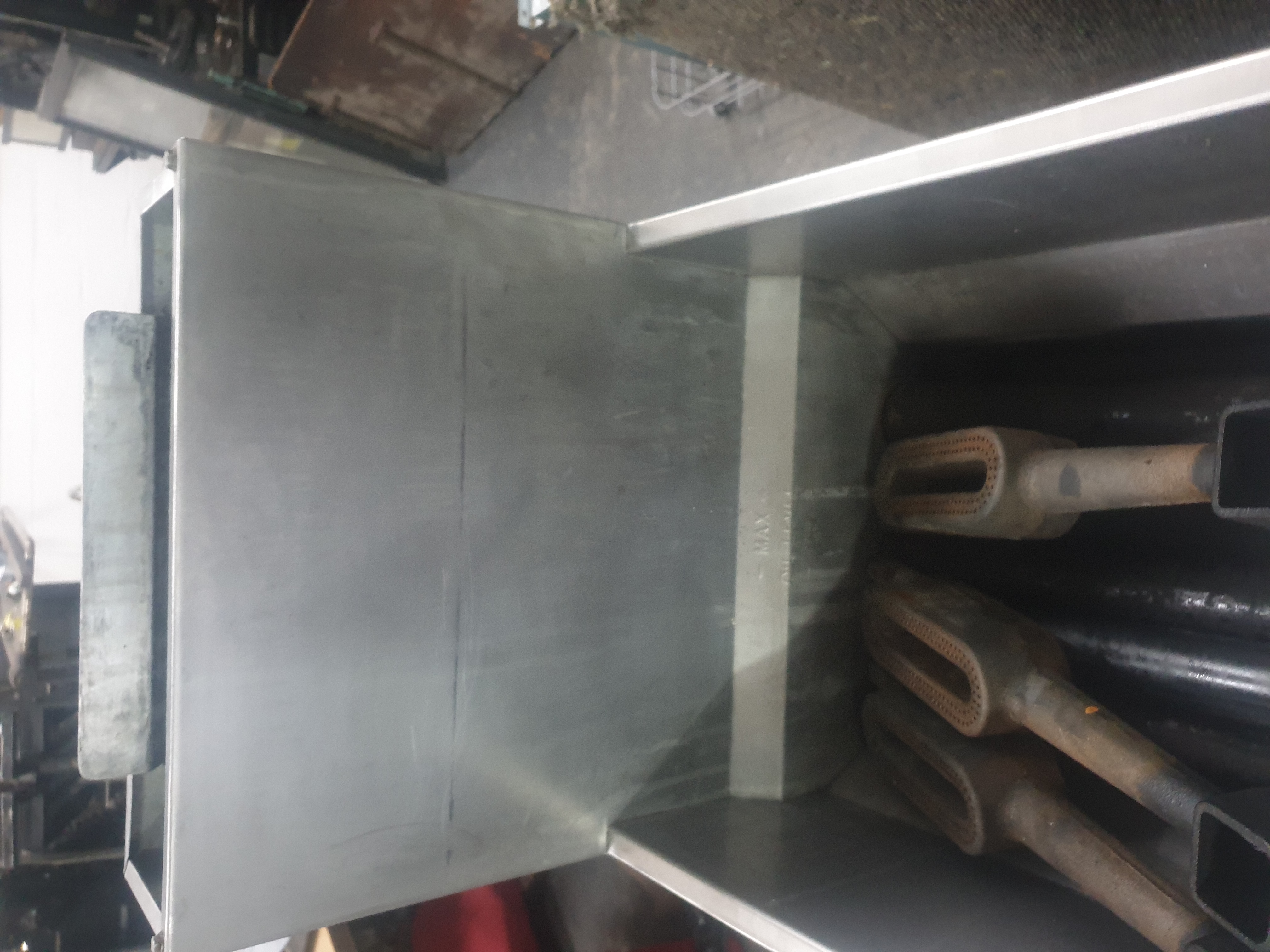
Fryer burners are designed to release gas through an injector and draw in the correct amount of primary air before ignition. A stable blue flame means the gas-air mixture is close to correct. Yellow tipping, lazy flames, lifting flames or delayed ignition can point to blocked ports, poor air intake, incorrect pressure, dirty burners or a draught problem inside the fryer base.
 FixakitchenCommercial gas fryer field notes
Gas fryer repair
Commercial gas fryer burner, pilot and safety control repair
A gas fryer looks simple from the front, but the working system is a controlled combustion appliance. The burners must mix gas and primary air correctly, the pilot flame must prove safe ignition, the thermostat must regulate oil temperature, and the high-limit safety must shut the fryer down before oil temperature becomes dangerous.
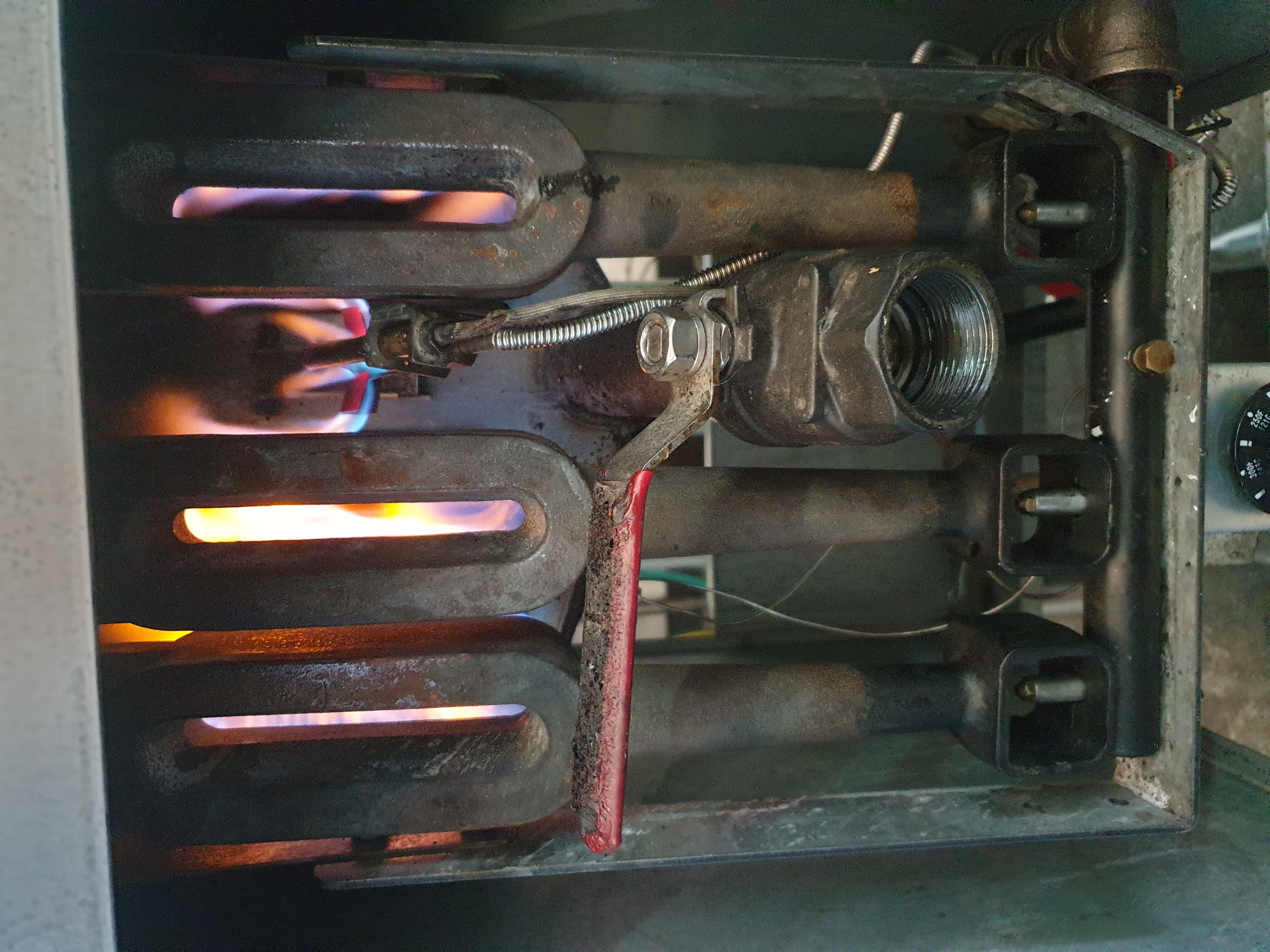
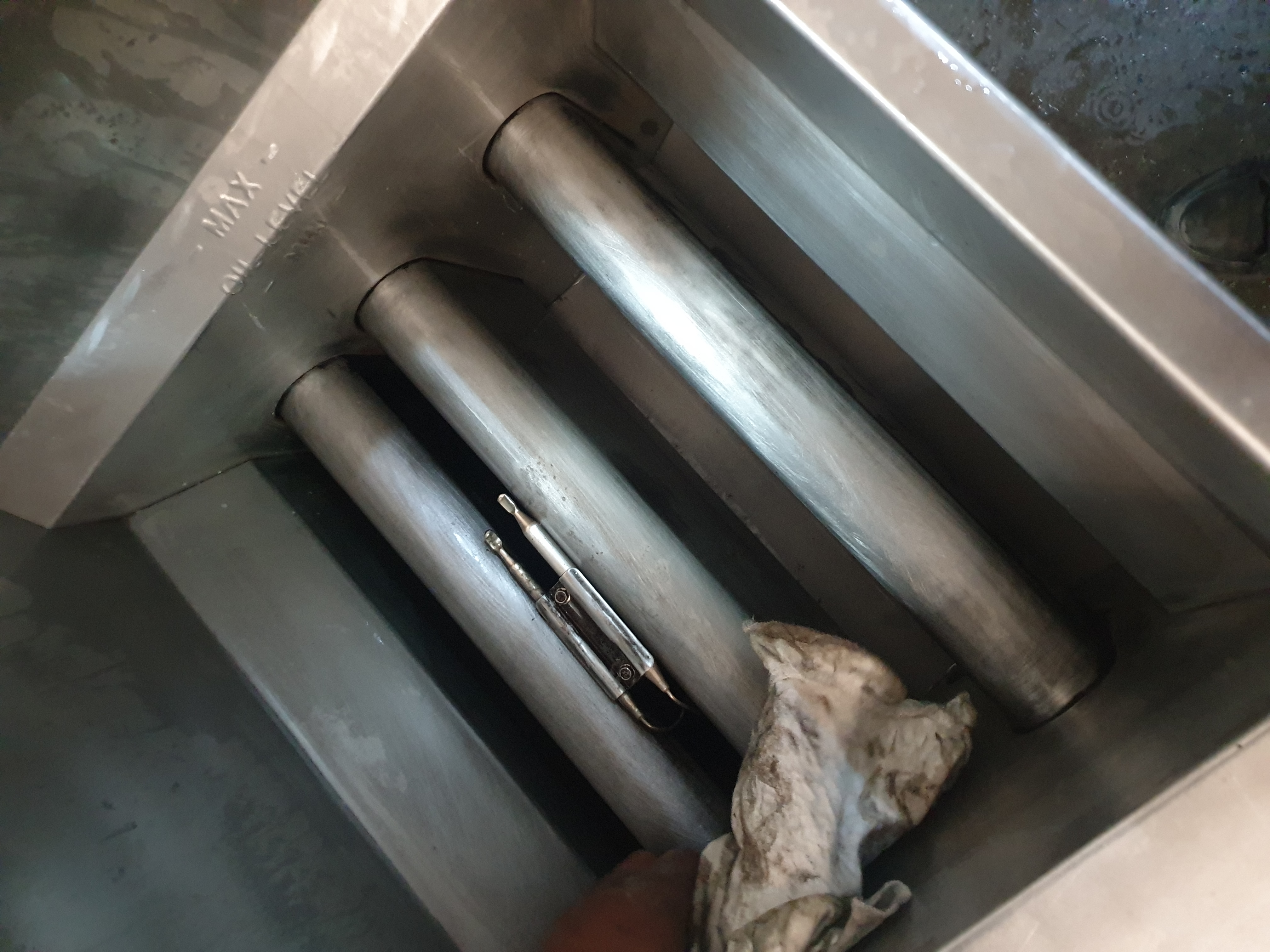
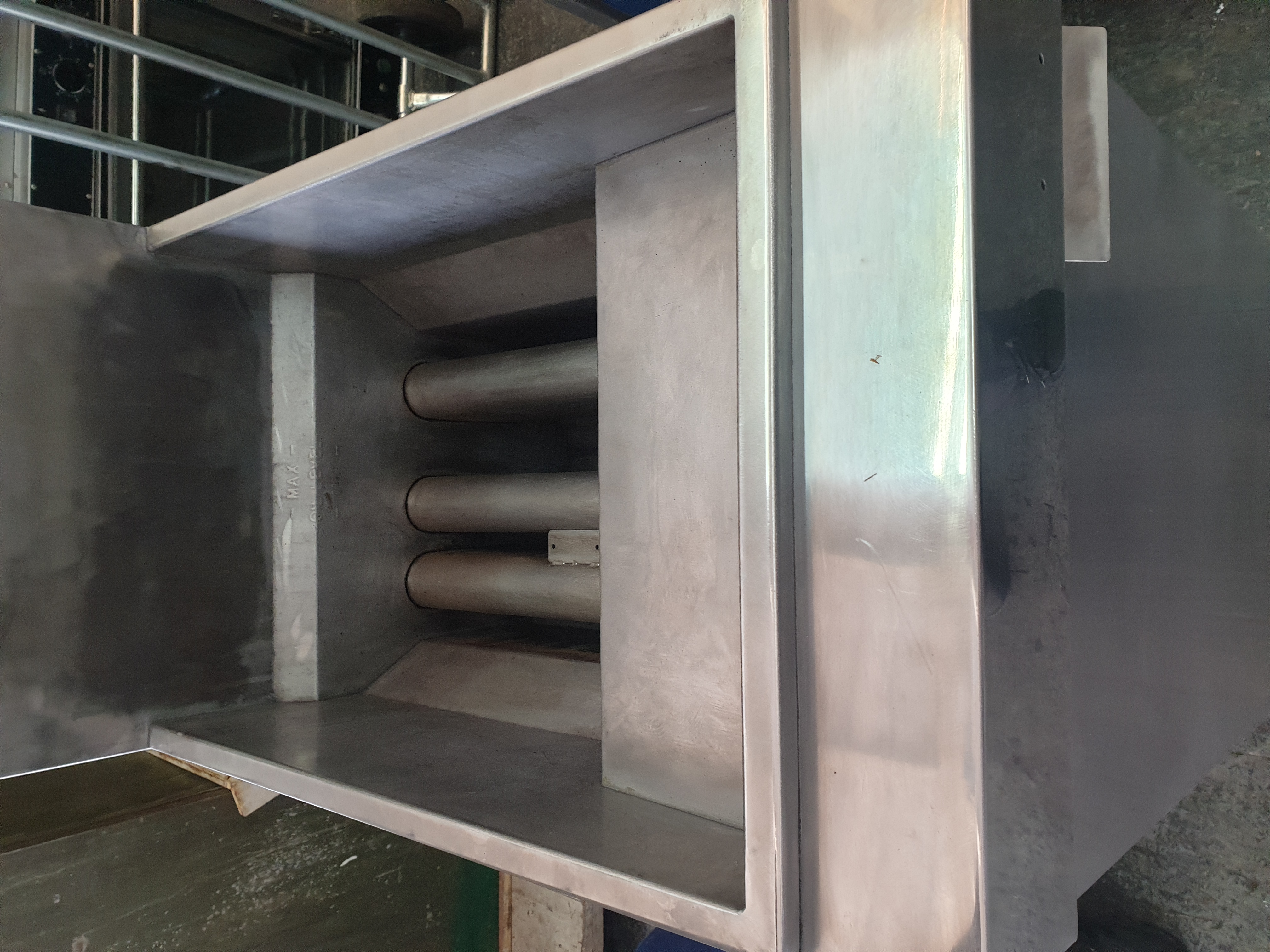
The flame does not heat the food directly. It heats the fryer tubes or heat exchanger surfaces, and those surfaces transfer energy into the oil. Scale, carbon, poor flame shape or damaged burner alignment wastes heat, slows recovery time and can create hot spots that stress the tank and safety controls.
The pilot is more than a small convenience flame. On many fryers it heats a thermocouple or flame sensor that proves flame is present. If the pilot goes out, the safety valve should close and stop unburnt gas from entering the appliance. A weak pilot, dirty pilot injector, loose thermocouple connection or failing safety valve can make a fryer hard to light or unsafe to leave in service.
The operating thermostat cycles the main burners to hold the oil near the selected cooking temperature. If its sensing bulb is loose, coated with carbon, wrongly positioned or failing internally, the fryer can overshoot, underheat or recover slowly. Accurate oil temperature is a food quality issue and a safety issue.
A separate high-limit thermostat is the last line of defence if normal temperature control fails. It is there to interrupt the gas control circuit before the oil reaches a dangerous temperature. Bypassing a high-limit, forcing a tripped control to run, or ignoring repeated trips is dangerous because fryer oil stores a large amount of heat.
Pilot tubing, unions, valve stems, burner manifolds and flexible hose connections must be treated seriously. Gas leaks are not diagnosed by smell alone. A safe inspection uses isolation, ventilation, appropriate leak-detection method, flame observation and controlled testing. If a fryer smells of gas, will not light normally, or makes a delayed ignition sound, switch it off and book a service before using it again.
Gas appliance safety
Fryer not lighting, smelling of gas or overheating?
Stop using the fryer, isolate it where safe to do so, ventilate the area and request a service. Fixakitchen can assist with commercial fryer diagnosis, burner cleaning, pilot faults, thermostat issues and safety-control checks in Cape Town.