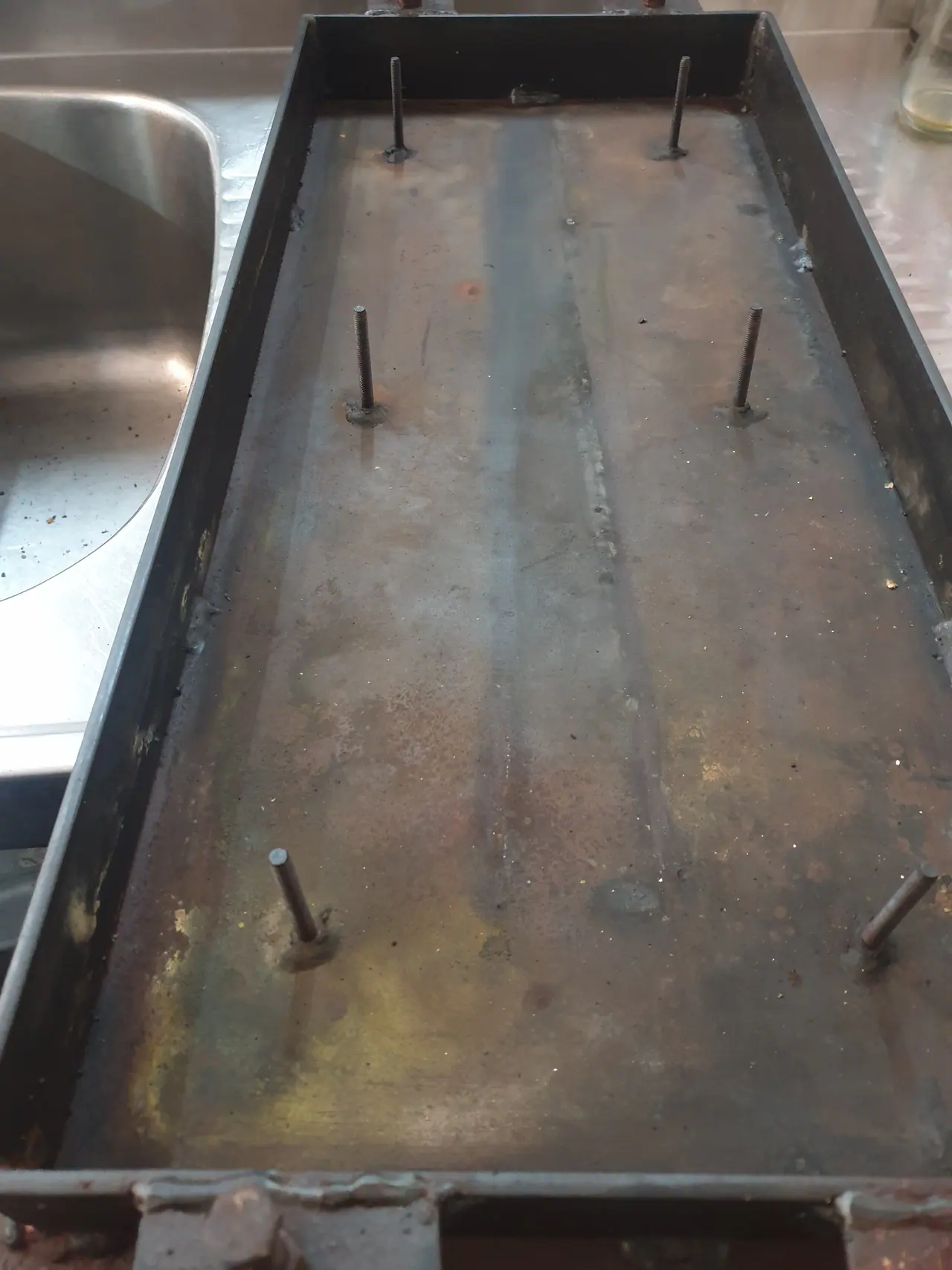
A flat-top griddle uses a heavy steel cooking plate with electric elements mounted underneath. Some kitchens call it a grill top, hotplate or flat top. It is used for eggs, burgers, toasted items, breakfast service and high-volume line cooking where even surface heat matters more than flame.
 FixakitchenCommercial cooking equipment field notes
Commercial gas and electric griddle repair
Commercial flat-top griddle and hotplate repairs
Commercial flat tops may use gas burners or electric elements. This field note shows an electric repair, while our wider assessment covers uneven heat, poor recovery, ignition, burner, element, wiring and thermostat faults.
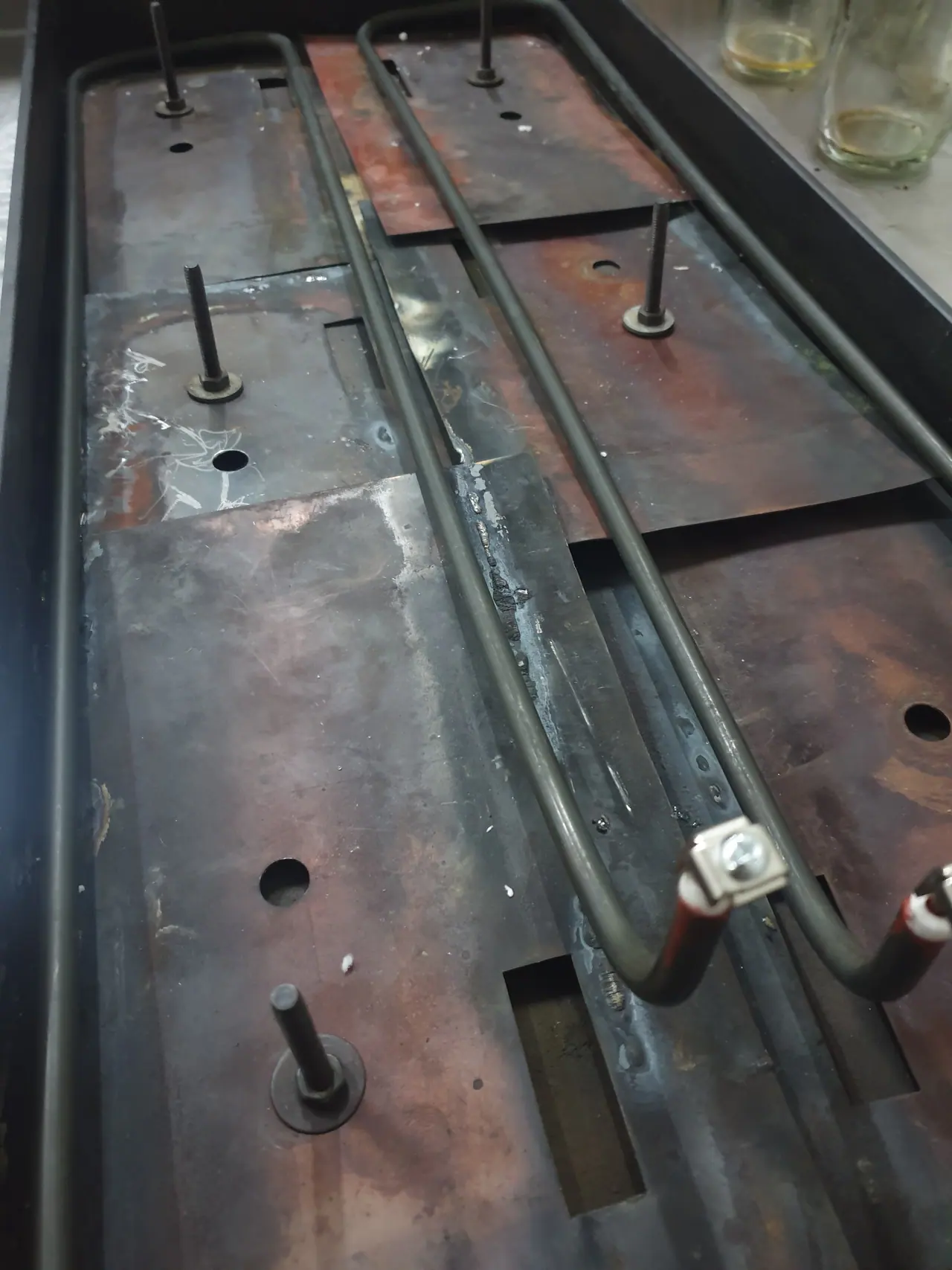
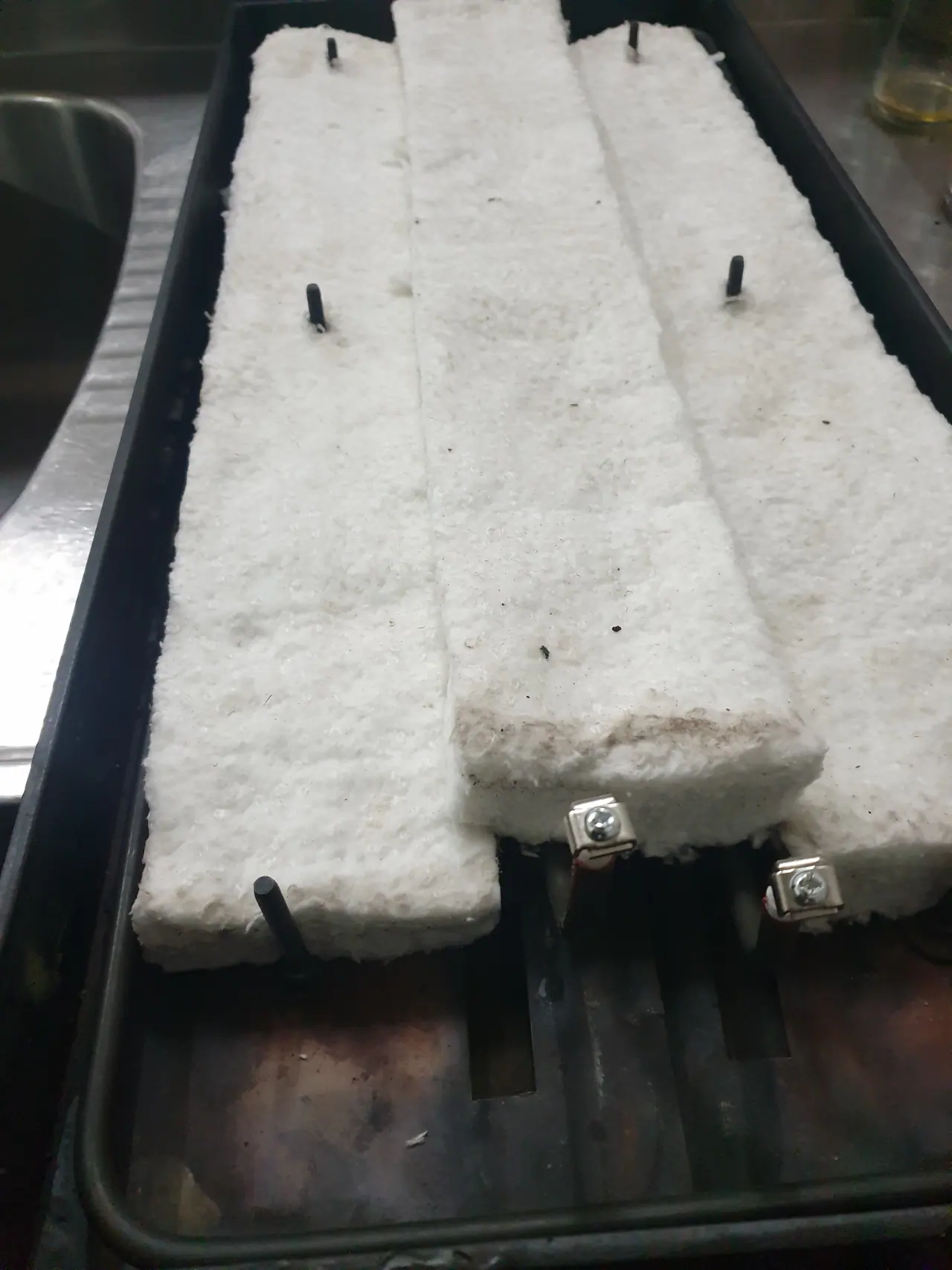
The element does not cook the food directly. The element heats the steel plate, and the plate spreads that heat across the cooking surface. If the element is loose, warped, badly seated or not making proper contact, the surface can develop cold spots even when the electrical circuit still looks alive.
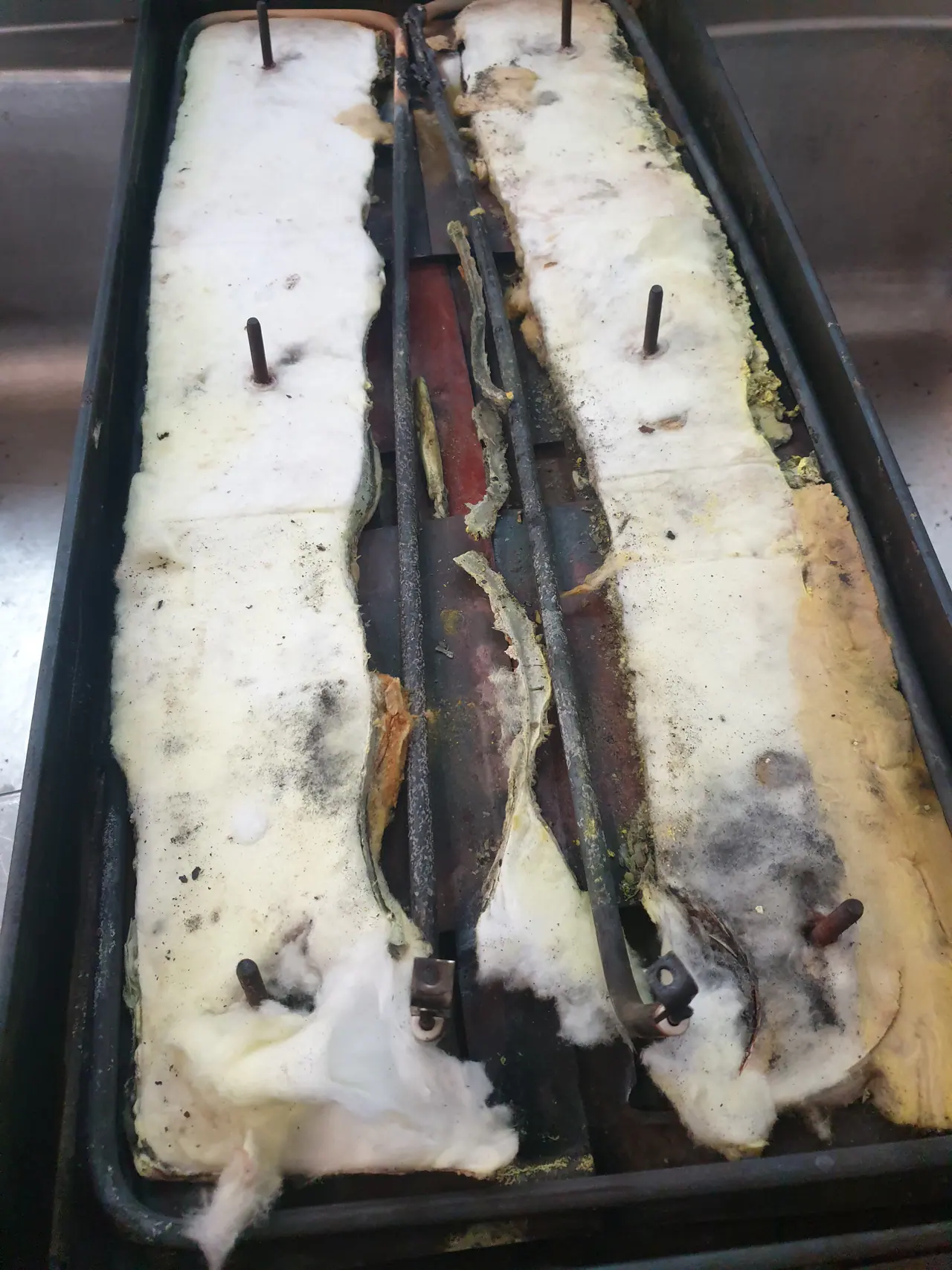
The white insulation blanket is there to keep heat going into the cooking plate instead of wasting it into the base of the unit. Burnt, contaminated or missing insulation makes the griddle slower, hotter underneath and less efficient. It can also put extra heat stress on wiring, terminals and nearby controls.
Heating elements fail electrically, but they also fail mechanically. Terminals loosen, ceramic posts crack, insulation breaks down and heat cycling moves parts over time. A proper repair checks continuity, insulation resistance, terminal condition and whether the element is still sitting where it can transfer heat correctly.
A griddle that overheats, cycles too slowly or never reaches set temperature can have a thermostat, probe, capillary, contactor, relay or wiring problem. The control must read the plate correctly and switch the load safely. Guessing at parts is expensive because high-current cooking equipment can have more than one fault at once.
In service, the fault usually shows up as uneven browning, one side cooking slowly, long heat-up time, nuisance tripping, burnt smells, hot panels or the unit not recovering after a rush. Those symptoms are why the underside matters as much as the top cooking surface.
Gas units can suffer from blocked or uneven burners, weak pilots, ignition faults, flame-safety problems, regulator issues and poor combustion. Gas smells, delayed ignition or flame rollout require the equipment to be switched off for qualified assessment.
Electric units rely on elements, contactors, thermostats, probes, wiring and firm heat transfer into the plate. Loose connections or poor element contact can create slow recovery and cold cooking zones.
Cooking line repairs
Flat top, hotplate or griddle not heating properly?
Send the equipment type, brand, location, fault description and photos of the data plate. Fixakitchen repairs commercial griddles, hotplates, ovens, fryers and other cooking line equipment in Cape Town.